Looking back at CA NEVI Round 2: A deep dive into the winners and losers



With the official announcement of CA NEVI Solicitation 3 and its $79 million in available funding, the race is on to secure the next wave of corridor charging. To help applicants navigate this competitive landscape, Alex Agne, Account Executive, looked back at the Round 2 results to break down exactly what types of sites won and the CEC's winning criteria.
With the release of the CA NEVI Round 2 results, I wanted to dig into the types of sites that were awarded and the site strategies for the major awardees. This is a short post, focusing on high level analysis of the award and the types of locations at awarded sites.
First off, here is a map with the awarded locations:
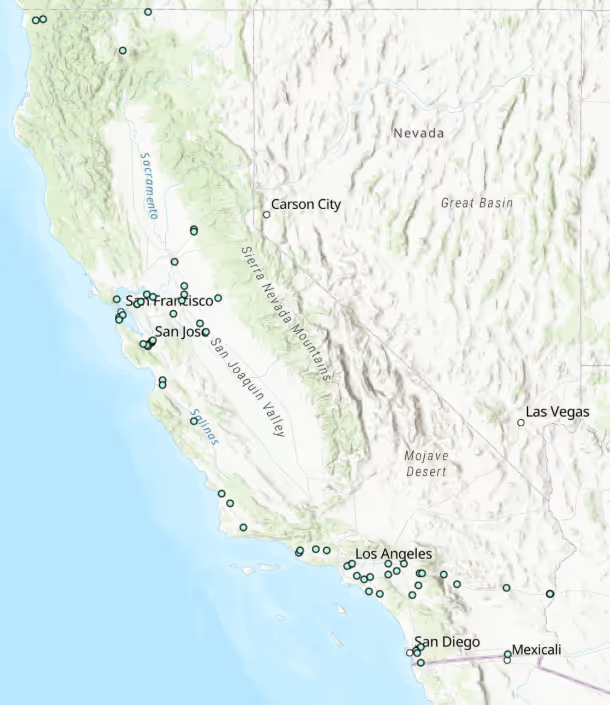
Then, I decided to overlay all available corridors in Round 2 to get a sense of where we see concentrated corridor awards and where there were little to no awarded sites:

CA NEVI Round 2 proposal details
Across all submitted proposals, applicants requested more than $138.2 million in funding, with total awarded funding coming out to $36.8 million. Out of 73 distinct proposals submitted by 15 different entities, 30 were recommended for an award (41.1%) and 7 entities received no awarded sites at all. Here is a breakdown of the awards by applicant by total proposal, awarded proposal, award percentage, and awarded site count:

A closer look at the unsuccessful proposals shows that a majority were eliminated for failing to meet fundamental program requirements, not because of competition from other providers. The failures fall into three distinct groups:
- Technical Disqualifications: 17 proposals were "Disqualified in technical screening" and received no score. This could indicate incomplete forms, missing required documentation, or failing to meet foundational project eligibility criteria.
- Failure to Meet Minimum Score: Another 23 proposals were deemed technically complete but "Failed to achieve the overall minimum passing score". This indicates that the substance of the proposal (project narrative, technical approach, financial plan, and/or community benefits) was judged to be insufficient by the CEC's evaluation team and not strong enough for public investment.
- Outranked in Competition: 3 proposals achieved a passing score but were not funded because they "ranked below proposed awardees for this corridor segment".
Awarded site characteristics
Below is a breakdown of the different types of sites that were awarded, as well as the specifics for each applicant.
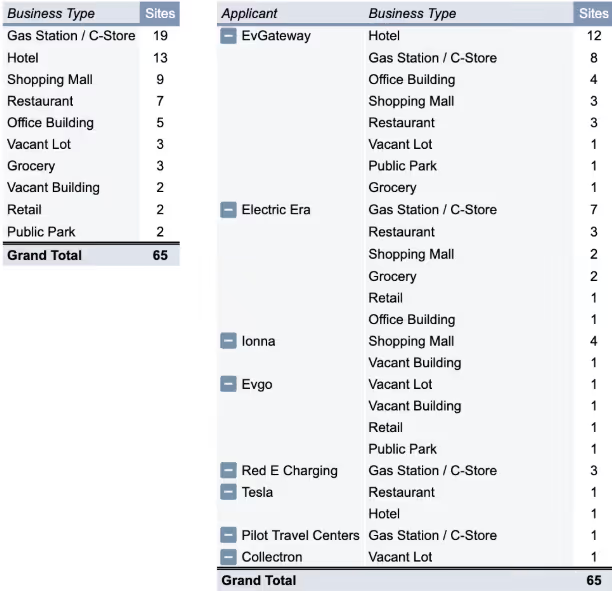
Here are my thoughts on the awarded locations by category:
- Gas Station / Convenience Store does not surprise me for taking the top spot, as this grant funding opportunity requires locations to be within 1 mile of a highway exit and prioritizes some elements like lighting, safety, and 24/7 business operation hours. Power Market brand of convenience stores was the largest awardee at 4 stores, with others like ARCO, Extra Mile, Chevron, 76, and Shell stations also adding fast charging infrastructure
- Hotels came in second place. Looking at the awarded sites, we find that EvGateway was the heavy user of hotels in their application, with 12 of the 13 awarded hotel locations coming from their proposals. Hotels have some amenities that EV drivers want, but I associate them much more with Level 2 overnight charging, and not with the 15-45 minute stop for DCFC stations. Hotels are also often franchised, with individual owners making decisions about what happens in the parking lot. The relative ease of getting site license agreements with a hotel owner could be a reason for many of EvGateway’s awards coming at hotel locations, especially given the huge number of proposals they submitted
- The awards at shopping malls were concentrated in the top three awarded applicants (EvGateway, Electric Era, and Ionna). For Ionna, co-locating with shopping malls was their main strategy, with 4 out of their 5 awards landing in shopping mall parking lots. We will see how they carve out their Rechargery customer experience in these locations going forward
- Vacant lots or vacant buildings combined received 5 awards, showing that additional construction and retail development will be in the cards for some awardees, above and beyond the work required to bring EV charging to an existing retail location
- Restaurants are a natural location for EV charging, from QSRs like Starbucks, fast casual chains like Panera and Five Guys, and even several local sit down restaurants all receiving awards
- Excitement about grocery locations. I think that supermarkets are a perfect place for a 15-30 minute recharge that completes two errands in one trip. Grocery stores and retail players like Safeway, Kroger, Costco, Walmart, etc. already have expanded into selling gas on their lots, and more are now moving into the EV charging space as well
Ready for Round 3? How to apply for California’s $79M fund
CA NEVI Solicitation 3 is a strong opportunity for retailers to modernize their properties. With millions now on the table, the CEC is specifically looking to fill the remaining corridor gaps—and as our Round 2 analysis shows, technical readiness is the #1 factor that separates winners from unsuccessful applicants. Whether you are a business owner or a property developer, our team can help you avoid the common pitfalls that led to the high disqualification rates we saw last year.
Get expert help with your grant strategy
Navigating the complexities of federal and state funding doesn't have to be a solo effort. Electric Era’s Government Affairs team has a proven track record, helping secure over $40M in total funding for our customers with an 85% win rate on NEVI grants.
We offer end-to-end support—from initial site feasibility and grid analysis to drafting a winning project narrative. Here is how you can get started:
- Watch our on-demand webinar: Our team does a deep-dive into the 2026 grants roadmap. We break down the $500M+ nationwide landscape and share the specific strategies needed to win in markets like California, Ohio, and Illinois.
- Explore our Resources: Visit our Grants, Funding, and Incentives page to see how we can help you maximize your award potential.
- Analyze Your Site: Request a Free Site Readiness Report today. We will review your location, analyze local grid capacity, and predict how your site will score against the CEC’s competitive criteria.
With the official announcement of CA NEVI Solicitation 3 and its $79 million in available funding, the race is on to secure the next wave of corridor charging. To help applicants navigate this competitive landscape, Alex Agne, Account Executive, looked back at the Round 2 results to break down exactly what types of sites won and the CEC's winning criteria.
With the release of the CA NEVI Round 2 results, I wanted to dig into the types of sites that were awarded and the site strategies for the major awardees. This is a short post, focusing on high level analysis of the award and the types of locations at awarded sites.
First off, here is a map with the awarded locations:
Then, I decided to overlay all available corridors in Round 2 to get a sense of where we see concentrated corridor awards and where there were little to no awarded sites:
CA NEVI Round 2 proposal details
Across all submitted proposals, applicants requested more than $138.2 million in funding, with total awarded funding coming out to $36.8 million. Out of 73 distinct proposals submitted by 15 different entities, 30 were recommended for an award (41.1%) and 7 entities received no awarded sites at all. Here is a breakdown of the awards by applicant by total proposal, awarded proposal, award percentage, and awarded site count:
A closer look at the unsuccessful proposals shows that a majority were eliminated for failing to meet fundamental program requirements, not because of competition from other providers. The failures fall into three distinct groups:
- Technical Disqualifications: 17 proposals were "Disqualified in technical screening" and received no score. This could indicate incomplete forms, missing required documentation, or failing to meet foundational project eligibility criteria.
- Failure to Meet Minimum Score: Another 23 proposals were deemed technically complete but "Failed to achieve the overall minimum passing score". This indicates that the substance of the proposal (project narrative, technical approach, financial plan, and/or community benefits) was judged to be insufficient by the CEC's evaluation team and not strong enough for public investment.
- Outranked in Competition: 3 proposals achieved a passing score but were not funded because they "ranked below proposed awardees for this corridor segment".
Awarded site characteristics
Below is a breakdown of the different types of sites that were awarded, as well as the specifics for each applicant.
Here are my thoughts on the awarded locations by category:
- Gas Station / Convenience Store does not surprise me for taking the top spot, as this grant funding opportunity requires locations to be within 1 mile of a highway exit and prioritizes some elements like lighting, safety, and 24/7 business operation hours. Power Market brand of convenience stores was the largest awardee at 4 stores, with others like ARCO, Extra Mile, Chevron, 76, and Shell stations also adding fast charging infrastructure
- Hotels came in second place. Looking at the awarded sites, we find that EvGateway was the heavy user of hotels in their application, with 12 of the 13 awarded hotel locations coming from their proposals. Hotels have some amenities that EV drivers want, but I associate them much more with Level 2 overnight charging, and not with the 15-45 minute stop for DCFC stations. Hotels are also often franchised, with individual owners making decisions about what happens in the parking lot. The relative ease of getting site license agreements with a hotel owner could be a reason for many of EvGateway’s awards coming at hotel locations, especially given the huge number of proposals they submitted
- The awards at shopping malls were concentrated in the top three awarded applicants (EvGateway, Electric Era, and Ionna). For Ionna, co-locating with shopping malls was their main strategy, with 4 out of their 5 awards landing in shopping mall parking lots. We will see how they carve out their Rechargery customer experience in these locations going forward
- Vacant lots or vacant buildings combined received 5 awards, showing that additional construction and retail development will be in the cards for some awardees, above and beyond the work required to bring EV charging to an existing retail location
- Restaurants are a natural location for EV charging, from QSRs like Starbucks, fast casual chains like Panera and Five Guys, and even several local sit down restaurants all receiving awards
- Excitement about grocery locations. I think that supermarkets are a perfect place for a 15-30 minute recharge that completes two errands in one trip. Grocery stores and retail players like Safeway, Kroger, Costco, Walmart, etc. already have expanded into selling gas on their lots, and more are now moving into the EV charging space as well
Ready for Round 3? How to apply for California’s $79M fund
CA NEVI Solicitation 3 is a strong opportunity for retailers to modernize their properties. With millions now on the table, the CEC is specifically looking to fill the remaining corridor gaps—and as our Round 2 analysis shows, technical readiness is the #1 factor that separates winners from unsuccessful applicants. Whether you are a business owner or a property developer, our team can help you avoid the common pitfalls that led to the high disqualification rates we saw last year.
Get expert help with your grant strategy
Navigating the complexities of federal and state funding doesn't have to be a solo effort. Electric Era’s Government Affairs team has a proven track record, helping secure over $40M in total funding for our customers with an 85% win rate on NEVI grants.
We offer end-to-end support—from initial site feasibility and grid analysis to drafting a winning project narrative. Here is how you can get started:
- Watch our on-demand webinar: Our team does a deep-dive into the 2026 grants roadmap. We break down the $500M+ nationwide landscape and share the specific strategies needed to win in markets like California, Ohio, and Illinois.
- Explore our Resources: Visit our Grants, Funding, and Incentives page to see how we can help you maximize your award potential.
- Analyze Your Site: Request a Free Site Readiness Report today. We will review your location, analyze local grid capacity, and predict how your site will score against the CEC’s competitive criteria.