Why Retail-First Charging Changes the Game



This article was originally published on LinkedIn
Most EV charging hardware was designed with one primary goal: deliver power to vehicles. Retail considerations—brand, space efficiency, customer engagement—were secondary, if considered at all.
That legacy shows.
Bulky cabinets, unreliable uptime, slow deployment, and blank or generic screens are common. For retailers trying to integrate charging into a broader omnichannel strategy, these limitations are not cosmetic. They are structural.
Charging as an Extension of Retail Space
Retail-first charging starts from a different premise: the charging kiosk is not just equipment, it is part of the store.
That means:
- The form factor must work in dense, high-traffic parking lots
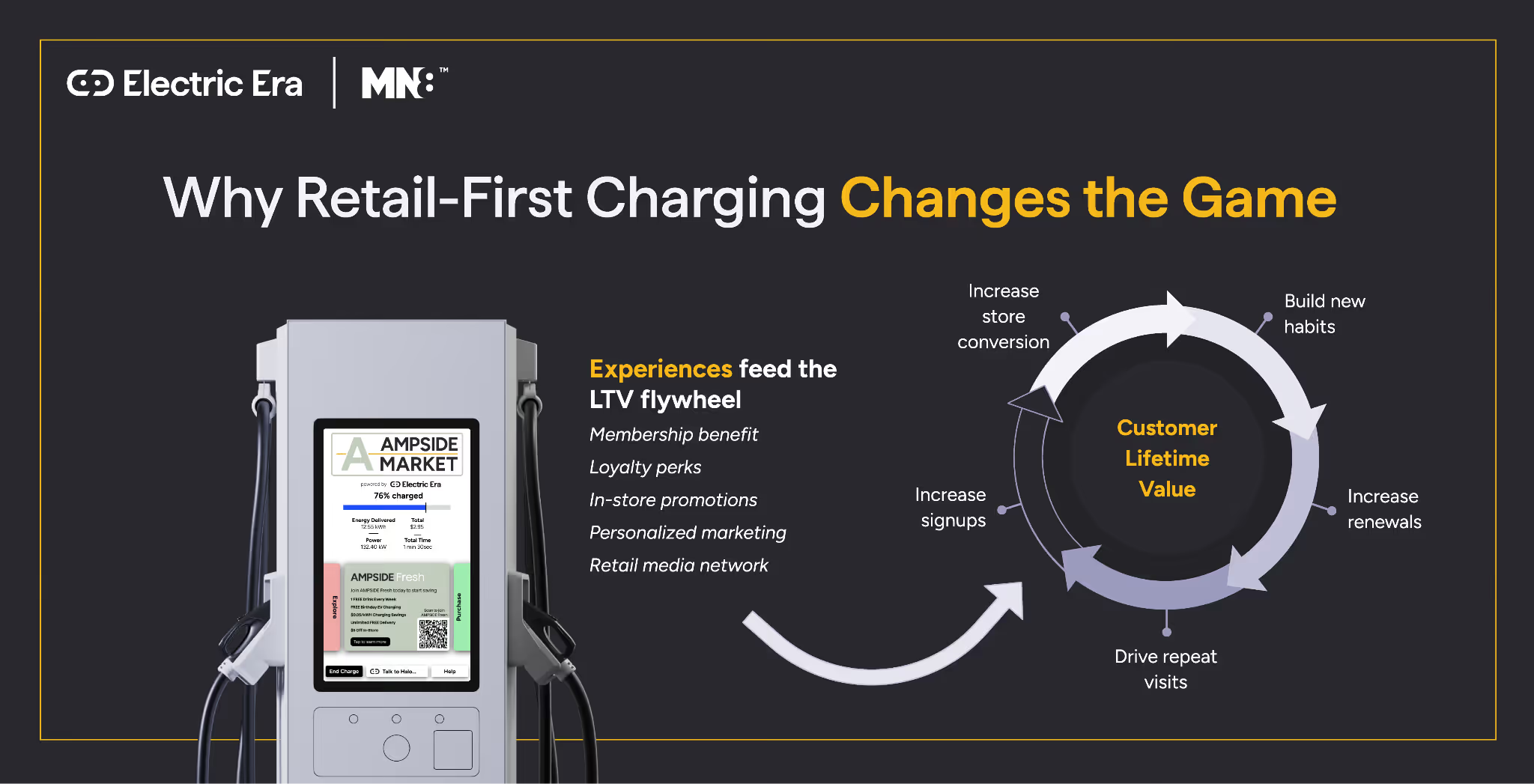
- The screen must support promotions, loyalty, retail media, and dynamic content
- The software must integrate with existing retail systems
- The experience must reinforce the brand, not dilute it
When charging is treated as retail infrastructure, new opportunities emerge. Promotions can be targeted to drivers while they wait. Loyalty enrollment can happen in the parking lot. Charging sessions become moments of intent, not idle time.
Reliability Is Not Optional
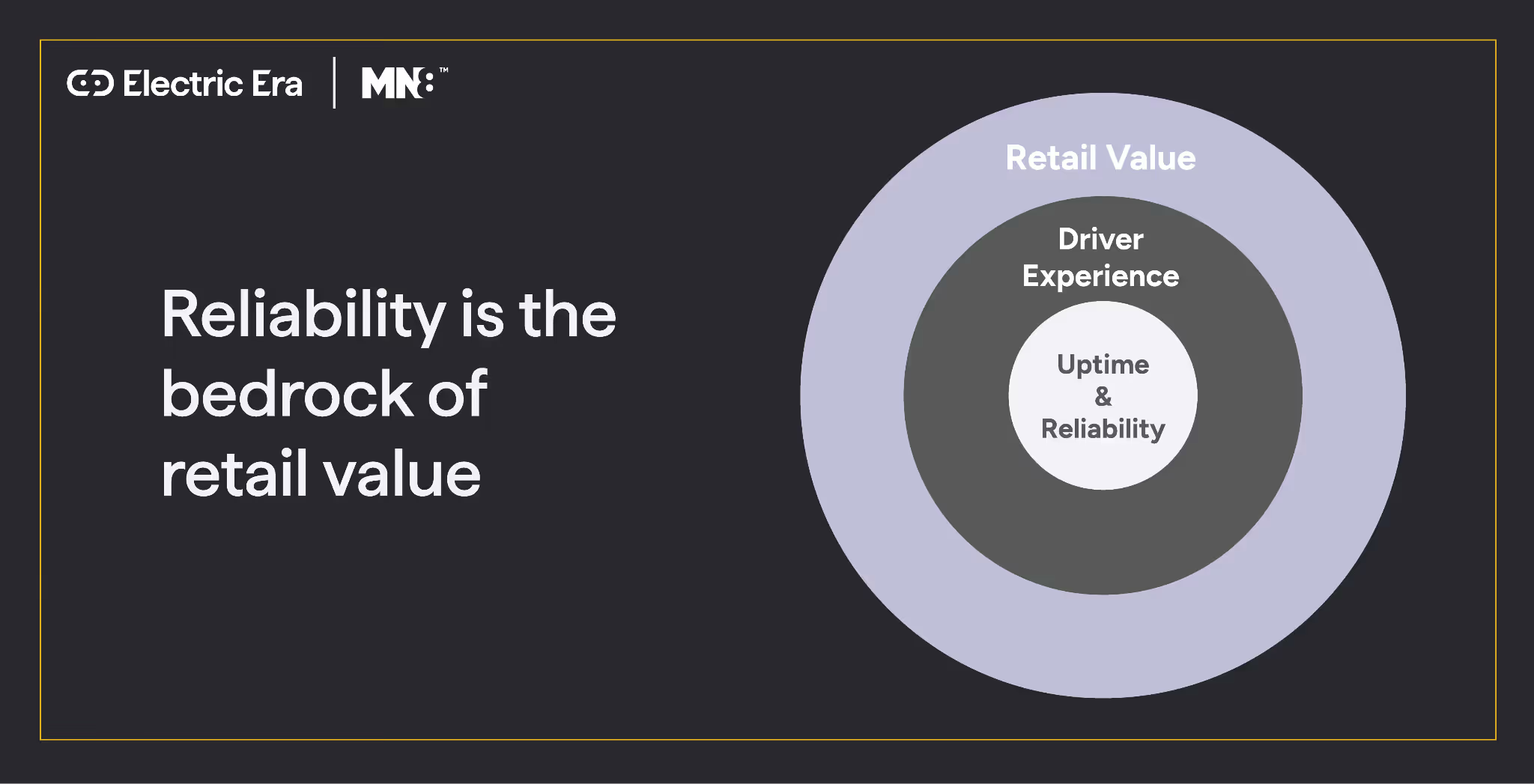
None of this matters if the charger does not work.
Retail-first charging systems are increasingly built with battery-backed architectures that decouple charger performance from grid constraints. This enables:
- Faster deployment timelines
- Consistent high-power output even on constrained sites while mitigating exposure to demand charges
- Dramatically higher uptime at the port level
From a retailer’s perspective, reliability is not a technical metric. It is a brand promise. A charger that is offline is a broken customer interaction.
The Power of Combining Retail-First Tech with CaaS
On their own, advanced chargers still require capital, teams, and operational expertise. On their own, infrastructure owners may lack retail DNA.
The combination is what unlocks scale.
By pairing retail-first charging technology with a Charging as a Service model, retailers can:
- Launch quickly across dozens or hundreds of sites
- Maintain control over brand, pricing, and customer experience
- Avoid capital lock-up and organizational drag
- Capture both charging revenue and retail lift
This is not about adding chargers. It is about adding a new customer acquisition and retention channel—one that happens to deliver electrons.
A Shift from Infrastructure to Strategy
The next phase of public EV charging will not be won by those who install the most plugs. It will be won by those who integrate charging into their core business model to create and deliver something compelling for customers.
Retailers already understand how to monetize dwell time, data, and loyalty. EV charging simply adds a new, high-value moment to apply those capabilities.
Charging as a Service removes the final barrier: the need to become an infrastructure company to play.
For retailers ready to move beyond passive site hosting and into ownership of the EV customer relationship, this model represents a structural shift—one that aligns incentives, accelerates deployment, and turns parking lots into profit centers.
The question is no longer whether EV charging belongs in retail strategy. It is how quickly retailers choose a model that lets them compete on their own terms.
See related articles:
This article was originally published on LinkedIn
Most EV charging hardware was designed with one primary goal: deliver power to vehicles. Retail considerations—brand, space efficiency, customer engagement—were secondary, if considered at all.
That legacy shows.
Bulky cabinets, unreliable uptime, slow deployment, and blank or generic screens are common. For retailers trying to integrate charging into a broader omnichannel strategy, these limitations are not cosmetic. They are structural.
Charging as an Extension of Retail Space
Retail-first charging starts from a different premise: the charging kiosk is not just equipment, it is part of the store.
That means:
- The form factor must work in dense, high-traffic parking lots
- The screen must support promotions, loyalty, retail media, and dynamic content
- The software must integrate with existing retail systems
- The experience must reinforce the brand, not dilute it
When charging is treated as retail infrastructure, new opportunities emerge. Promotions can be targeted to drivers while they wait. Loyalty enrollment can happen in the parking lot. Charging sessions become moments of intent, not idle time.
Reliability Is Not Optional
None of this matters if the charger does not work.
Retail-first charging systems are increasingly built with battery-backed architectures that decouple charger performance from grid constraints. This enables:
- Faster deployment timelines
- Consistent high-power output even on constrained sites while mitigating exposure to demand charges
- Dramatically higher uptime at the port level
From a retailer’s perspective, reliability is not a technical metric. It is a brand promise. A charger that is offline is a broken customer interaction.
The Power of Combining Retail-First Tech with CaaS
On their own, advanced chargers still require capital, teams, and operational expertise. On their own, infrastructure owners may lack retail DNA.
The combination is what unlocks scale.
By pairing retail-first charging technology with a Charging as a Service model, retailers can:
- Launch quickly across dozens or hundreds of sites
- Maintain control over brand, pricing, and customer experience
- Avoid capital lock-up and organizational drag
- Capture both charging revenue and retail lift
This is not about adding chargers. It is about adding a new customer acquisition and retention channel—one that happens to deliver electrons.
A Shift from Infrastructure to Strategy
The next phase of public EV charging will not be won by those who install the most plugs. It will be won by those who integrate charging into their core business model to create and deliver something compelling for customers.
Retailers already understand how to monetize dwell time, data, and loyalty. EV charging simply adds a new, high-value moment to apply those capabilities.
Charging as a Service removes the final barrier: the need to become an infrastructure company to play.
For retailers ready to move beyond passive site hosting and into ownership of the EV customer relationship, this model represents a structural shift—one that aligns incentives, accelerates deployment, and turns parking lots into profit centers.
The question is no longer whether EV charging belongs in retail strategy. It is how quickly retailers choose a model that lets them compete on their own terms.