Monetize the Mandate: Turning EV charging requirements into a retail advantage


For retail teams responsible for planning and building new sites, EV charging is no longer a future consideration. In many locations, it is already a building-code requirement (e.g. CALGreen) that shows up during plan review and permitting. That shift changes the stakes. Charging can’t be deferred or bolted on later. It must be designed, budgeted, and delivered on the same critical path as the store itself, with real implications for cost, complexity, and opening schedules.
When mandates first appear, most teams default to Level 2 (L2) charging. On paper, it looks like the simplest compliance path: slower chargers, lower per-unit power, familiar equipment.
In practice, an L2-heavy strategy often turns a one-time code requirement into a long-term operational tax.
Why L2 often breaks down in retail environments
Grocery runs, quick-service meals, and weekly errands rarely create enough dwell time for L2 charging to deliver meaningful value. A 30-minute charge using an L2 charger adds <5% SOC.
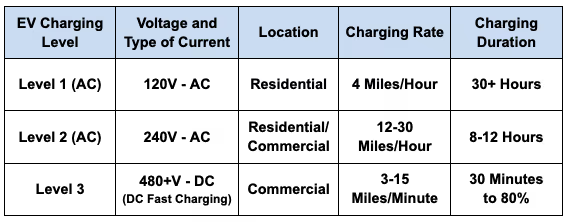
When the benefit is marginal, drivers do not plan around it and they do not reliably return for it. Utilization becomes uneven and chargers sit idle. The retailer absorbs the capital and operating cost, while customers receive a charging experience that feels inconsequential.
Mandates also tend to scale poorly with L2 because requirements are often expressed as a percentage of EV-capable spaces. The default response is to distribute L2 pedestals across the parking field. What looks straightforward on a site plan quickly becomes a site-wide electrical project: trenching across multiple rows, long conduit runs, added panels, inspections, and more opportunities for schedule slip.
On a large-format new build with hundreds of parking spaces, compliance can translate into dozens of installed L2 chargers spread across the lot. That is a lot of hardware to build, manage, and maintain, which is why mandates can start to feel like pure overhead.
The overlooked alternative: Power, not pedestals
What many teams miss is that codes often provide more than one compliance pathway. Alongside stall-count-driven approaches is a power-allocation approach that focuses on delivering sufficient charging capacity without requiring a sea of distributed L2 equipment.
Level 3 (DC fast charging) provides better alignment between regulation and retail reality. DC fast charging matches how customers already shop. In a 10–20 minute window, it can deliver meaningful range. That changes behavior: drivers are willing to pay for speed, they plan stops around it, and they are more likely to return to locations where charging feels worth the time.
Site design also changes dramatically. Instead of scattering infrastructure across the lot, fast charging allows retailers to concentrate power, construction, and maintenance into a clearly defined charging zone. Trenching is reduced, wayfinding is simpler, maintenance is centralized, and because each port delivers far more throughput, fewer assets can satisfy the same regulatory intent.
From compliance to profit center
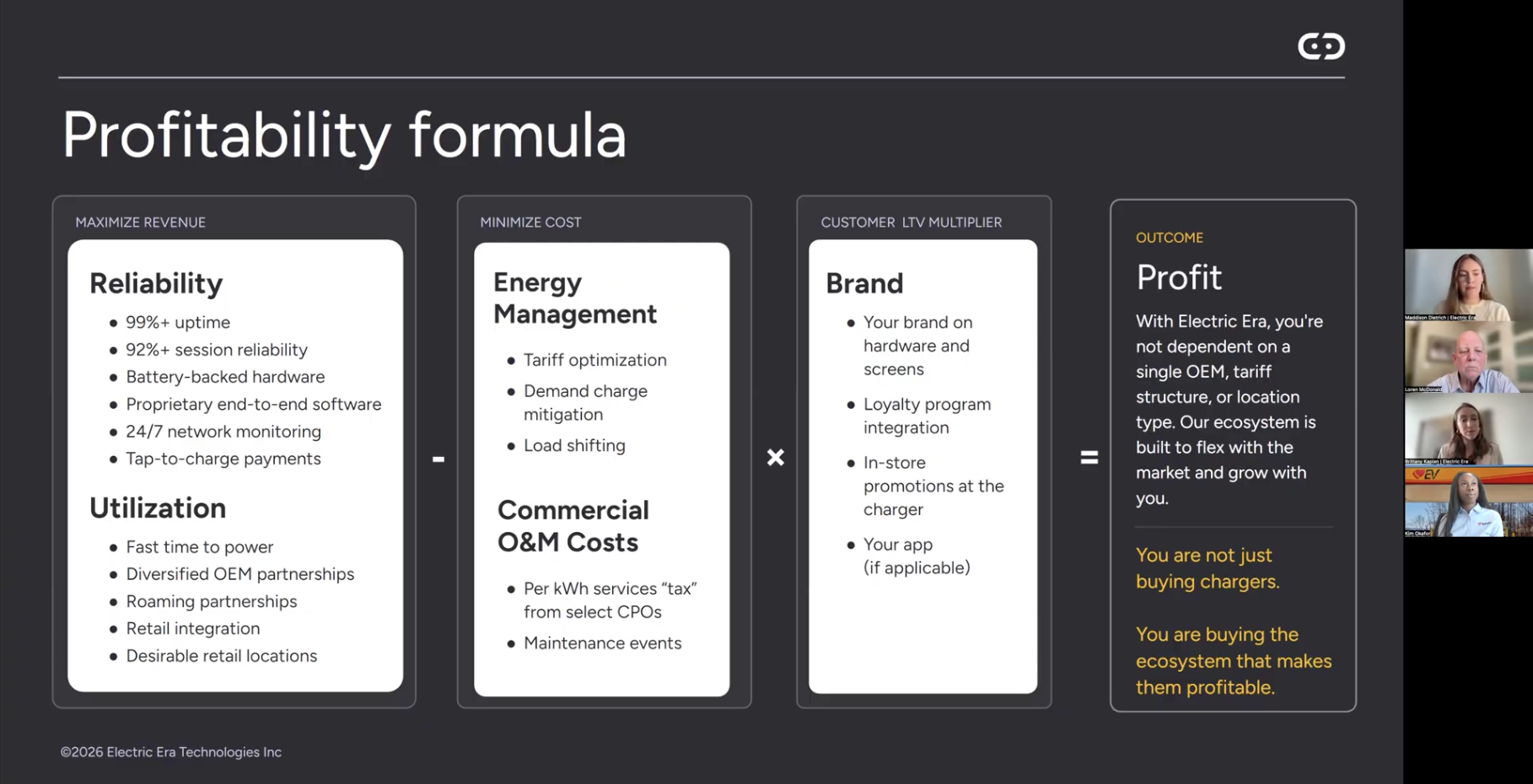
This is the core idea behind “Monetize the Mandate.” Retailers are being required to invest in their parking lots regardless. The real decision is whether that investment becomes a permanent cost to carry or an asset that generates returns.
DC fast charging makes monetization credible. In addition to direct charging revenue, retail-integrated fast charging drives incremental visits, repeat behavior, and enables retailers to convert dwell time into in-store revenue.
Critically, these value layers are easiest to unlock when the retailer owns the on-site charging experience. Control over pricing, uptime, branding, and retail program integration determines whether charging is just infrastructure or a strategic extension of the store.
Executing without adding risk
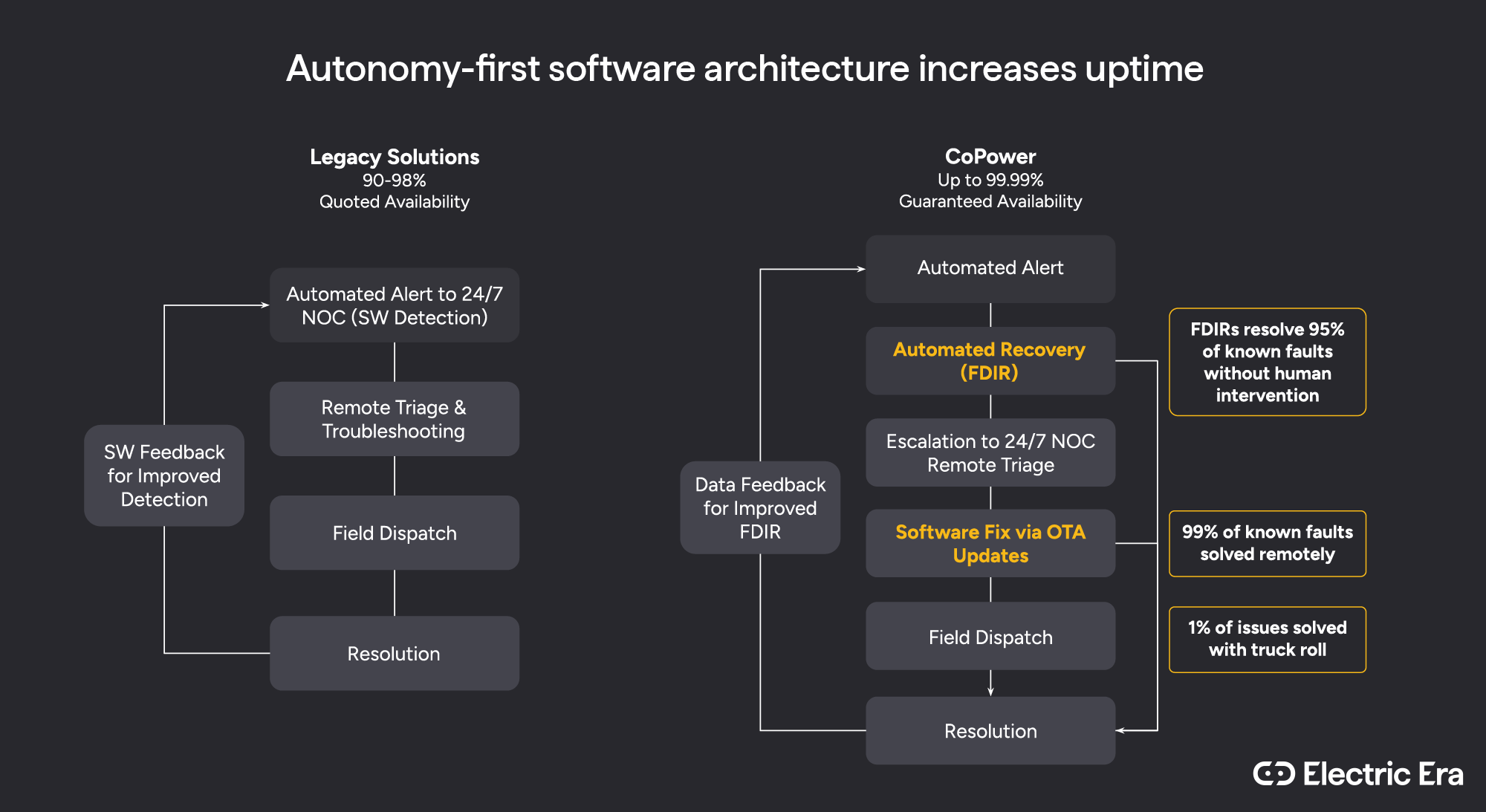
At Electric Era, we partner directly with retailers to integrate DC fast charging into new builds from the earliest planning stages. As an end-to-end turnkey partner, Electric Era manages procurement, construction, installation, commissioning, and ongoing operations with 24/7 monitoring and support. We also enable retail integration that connects charging to the same customer journeys retailers already manage inside the store.
Every retailer will have to respond to EV charging mandates. The choice is whether to simply check the box, or to use them to build something that aligns with how customers actually behave. L2 can meet a requirement on paper, but it often leaves years of complexity and low-value charging behind. DC fast charging meets the mandate while creating a platform that can pay for itself.
For retail teams responsible for planning and building new sites, EV charging is no longer a future consideration. In many locations, it is already a building-code requirement (e.g. CALGreen) that shows up during plan review and permitting. That shift changes the stakes. Charging can’t be deferred or bolted on later. It must be designed, budgeted, and delivered on the same critical path as the store itself, with real implications for cost, complexity, and opening schedules.
When mandates first appear, most teams default to Level 2 (L2) charging. On paper, it looks like the simplest compliance path: slower chargers, lower per-unit power, familiar equipment.
In practice, an L2-heavy strategy often turns a one-time code requirement into a long-term operational tax.
Why L2 often breaks down in retail environments
Grocery runs, quick-service meals, and weekly errands rarely create enough dwell time for L2 charging to deliver meaningful value. A 30-minute charge using an L2 charger adds <5% SOC.
When the benefit is marginal, drivers do not plan around it and they do not reliably return for it. Utilization becomes uneven and chargers sit idle. The retailer absorbs the capital and operating cost, while customers receive a charging experience that feels inconsequential.
Mandates also tend to scale poorly with L2 because requirements are often expressed as a percentage of EV-capable spaces. The default response is to distribute L2 pedestals across the parking field. What looks straightforward on a site plan quickly becomes a site-wide electrical project: trenching across multiple rows, long conduit runs, added panels, inspections, and more opportunities for schedule slip.
On a large-format new build with hundreds of parking spaces, compliance can translate into dozens of installed L2 chargers spread across the lot. That is a lot of hardware to build, manage, and maintain, which is why mandates can start to feel like pure overhead.
The overlooked alternative: Power, not pedestals
What many teams miss is that codes often provide more than one compliance pathway. Alongside stall-count-driven approaches is a power-allocation approach that focuses on delivering sufficient charging capacity without requiring a sea of distributed L2 equipment.
Level 3 (DC fast charging) provides better alignment between regulation and retail reality. DC fast charging matches how customers already shop. In a 10–20 minute window, it can deliver meaningful range. That changes behavior: drivers are willing to pay for speed, they plan stops around it, and they are more likely to return to locations where charging feels worth the time.
Site design also changes dramatically. Instead of scattering infrastructure across the lot, fast charging allows retailers to concentrate power, construction, and maintenance into a clearly defined charging zone. Trenching is reduced, wayfinding is simpler, maintenance is centralized, and because each port delivers far more throughput, fewer assets can satisfy the same regulatory intent.
From compliance to profit center
This is the core idea behind “Monetize the Mandate.” Retailers are being required to invest in their parking lots regardless. The real decision is whether that investment becomes a permanent cost to carry or an asset that generates returns.
DC fast charging makes monetization credible. In addition to direct charging revenue, retail-integrated fast charging drives incremental visits, repeat behavior, and enables retailers to convert dwell time into in-store revenue.
Critically, these value layers are easiest to unlock when the retailer owns the on-site charging experience. Control over pricing, uptime, branding, and retail program integration determines whether charging is just infrastructure or a strategic extension of the store.
Executing without adding risk
At Electric Era, we partner directly with retailers to integrate DC fast charging into new builds from the earliest planning stages. As an end-to-end turnkey partner, Electric Era manages procurement, construction, installation, commissioning, and ongoing operations with 24/7 monitoring and support. We also enable retail integration that connects charging to the same customer journeys retailers already manage inside the store.
Every retailer will have to respond to EV charging mandates. The choice is whether to simply check the box, or to use them to build something that aligns with how customers actually behave. L2 can meet a requirement on paper, but it often leaves years of complexity and low-value charging behind. DC fast charging meets the mandate while creating a platform that can pay for itself.