Solving the grid limit dilemma: How adaptive energy management delivers both performance and profit


For EV charging operators at enterprise retail locations, the economics of fast charging present a persistent dilemma: set your grid limits too conservatively and sacrifice profitability, or push them lower and risk degrading the driver experience during peak periods. Until now, this tradeoff seemed unavoidable.
Electric Era's Energy Management System’s (EMS) adaptive grid limits change this equation entirely, enabling operators to achieve aggressive cost savings without compromising charging performance—even during unpredictable demand spikes.
The challenge: Static limits in a dynamic environment
EV fast charging demand is inherently unpredictable. Unlike traditional retail energy loads that follow relatively consistent patterns, charging demand varies dramatically based on factors like time of day, day of week, seasonal traffic patterns, and the random arrival of vehicles with different battery states and charging capabilities.
This variability creates a fundamental challenge for energy management. Operators face mounting pressure from multiple directions:
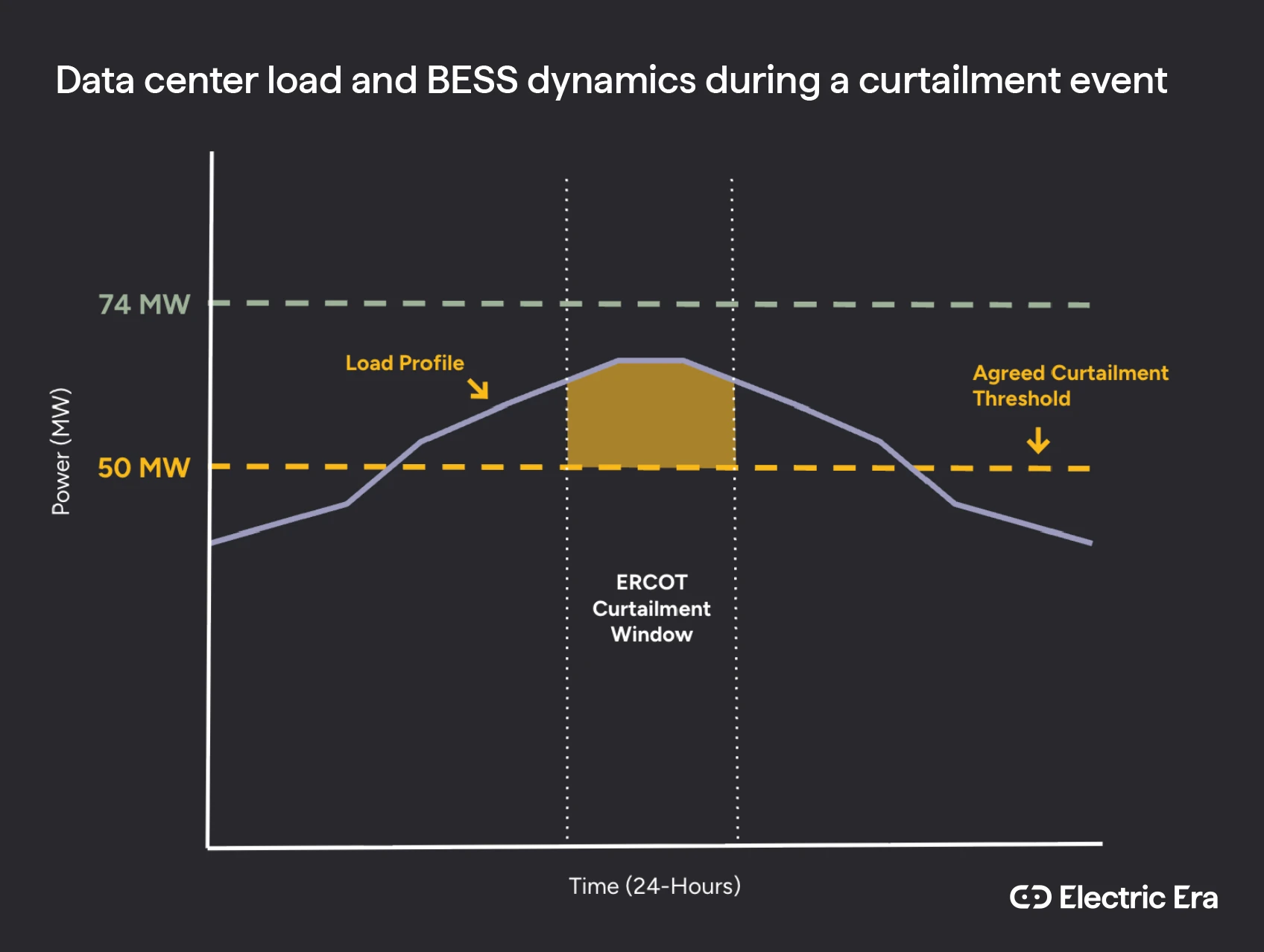
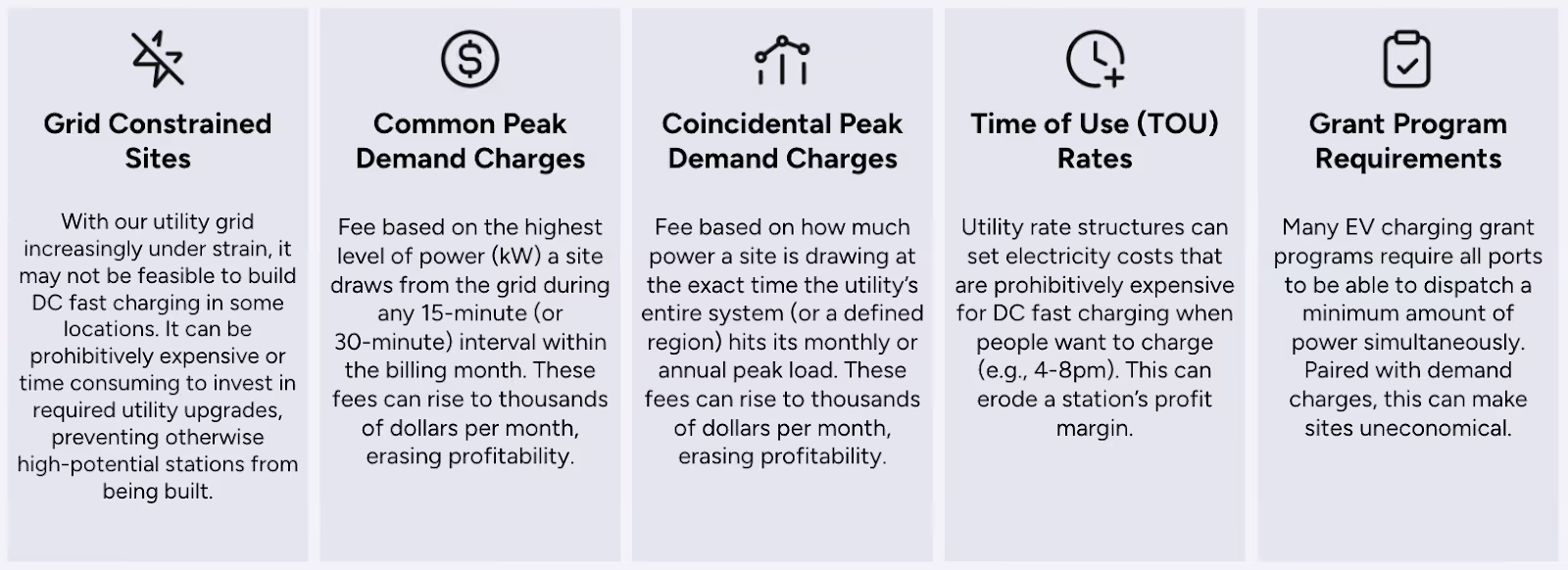
High peak-to-average power ratios strain grid infrastructure and often trigger punitive demand charges. A site might average 200 kW of demand but spike to 600 kW when three vehicles charge simultaneously—and utilities often bill based on the highest 15-minute peak during an entire month.
Complex tariff structures penalize grid usage in ways that compound quickly. Between standard peak demand charges (billed per kW of peak power for the month), time-of-use energy rates (varying $/kWh by time of day), and coincidental peak charges (fees based on drawing power during grid-wide peak periods), electricity costs can easily exceed 40-50% of total operating expenses. (Read: Mitigating demand charges with a smarter approach to EV charging)
Grant compliance requirements add operational constraints. Programs like NEVI mandate that charging stations deliver minimum per-port power levels simultaneously—often 150 kW per dispenser—regardless of actual demand patterns or economic considerations.
Traditional solutions offer only partial relief. Basic energy management systems can set a hard grid limit to cap demand charges, but this creates a new problem: if you set the limit based on average demand to maximize savings, you'll inevitably hit scenarios where multiple vehicles arrive simultaneously and charging speeds crater. Set it higher to protect performance, and you're leaving significant cost savings on the table.
The result? Most operators choose the conservative path, accepting higher electricity costs to avoid the reputational and operational risks of degraded charging performance.
The solution: Two limits, one intelligent system
Adaptive grid limits introduce a fundamentally different approach by separating economic optimization from performance protection.
Electric Era's complete control of the loads and sources of energy at a site allows us to tailor a site's power profile to address a wide range of electricity tariff and operational requirements. Specifically, instead of forcing operators to choose a single static limit, the system operates with two complementary thresholds:
The Soft Grid Limit serves as your economic baseline—an aggressive target that reflects your desired cost profile rather than worst-case power scenarios. This is where your site operates the majority of the time, using the on-site battery energy storage system (BESS) to absorb demand fluctuations above this level.
The Hard Grid Limit acts as your safety ceiling—a fixed upper bound that prevents uncontrolled grid draw while still protecting charging performance during rare, extreme demand events.
Between these two limits, Electric Era's EMS orchestrates a dynamic response to real-time demand:
- Stage 1: The system draws power from the grid up to the soft limit during normal operations.
- Stage 2: As concurrent charging increases, the BESS activates to supplement grid power, maintaining the soft grid limit while meeting rising demand. This is where the majority of cost savings occur—the battery absorbs peaks that would otherwise trigger demand charges.
- Stage 3: During rare scenarios when battery capacity saturates and demand continues rising, the system incrementally scales the grid limit upward to preserve charging speeds—but only as much as necessary and never beyond the hard limit.
- Stage 4: When demand subsides below the soft limit, the system intelligently recharges the battery from grid power, scheduling this recharging during optimal rate periods when possible.
This entire orchestration happens autonomously via integrated edge computing at the site level—no cloud dependency, no latency, no connectivity failures disrupting operations.
Real-world impact: Quantified results
The economic impact is substantial. A DCFC station powered by Electric Era in Buena Vista, CO is on pace to save approximately $60,000 annually in electricity costs—a reduction achieved without materially degrading drivers' charging experience.
Energy management savings break down across several mechanisms:
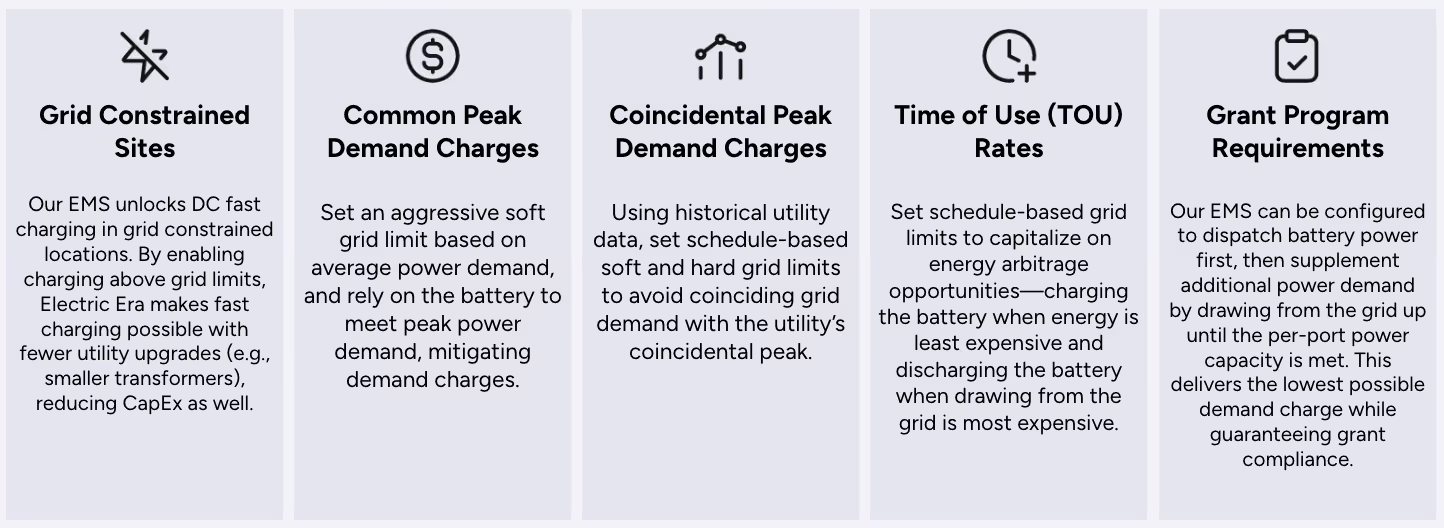
Demand charge mitigation: By maintaining an aggressive soft grid limit and using the BESS to handle peaks, sites can reduce peak grid draw by over 60% compared to nameplate demand. For locations facing demand charges of $10-25 per kW, this translates to thousands of dollars per month.
Time-of-use (TOU) rate arbitrage: The system reliably shifts 80% of battery energy capacity from low-rate periods to high-rate periods. In markets like California where PG&E's peak-to-super-off-peak differential reaches $0.24/kWh, this arbitrage alone can offset tens of thousands annually.
Coincidental peak management: Using historical utility data and predictive algorithms, the system can schedule grid limits to avoid coinciding with utility-wide peak periods—preventing the most punitive charges that some operators face.
Grant compliance optimization: For NEVI and similar programs, the system can be configured to dispatch battery power first when meeting per-port minimums, dramatically reducing the demand charge exposure that makes grant-funded sites economically challenging in high-tariff areas.
Designed for enterprise operations
For EV program owners managing multiple sites across diverse markets, adaptive grid limits integrate into your rollout strategy through a structured onboarding process:
Tariff analysis: Electric Era's Customer Success team works with your energy procurement and sustainability teams to map the utility tariff landscape at each location, identifying which rate structures apply and where the highest-impact savings opportunities exist.
Strategy alignment: Together, we configure site-specific soft and hard grid limits based on your operational priorities, expected utilization patterns, and cost reduction targets.
Real-world calibration: After one month of live operation, we analyze actual performance data (and the actual energy bill) and fine-tune settings to optimize the balance between cost savings and charging availability.
Ongoing monitoring: As your sites scale and utilization patterns evolve, the system adapts—no manual intervention required for day-to-day operations, with periodic reviews to ensure continued optimization.
From a driver perspective, the system is invisible. Charging performance remains consistent regardless of time of day, number of concurrent sessions, or grid conditions. Your brand promise of fast, reliable charging is protected while your operating margins improve.
Strategic advantages for energy and sustainability teams
Beyond direct cost savings, adaptive grid limits deliver strategic benefits aligned with corporate sustainability and energy management objectives:
Grid-friendly operations: By reducing peak demand and providing controllable load, your charging infrastructure becomes an asset to utilities rather than a strain. This positioning can unlock preferential rate structures, expedited interconnection approvals, and collaborative utility relationships that benefit future site development.
Regulatory alignment: As more jurisdictions implement demand response programs, critical peak pricing, and grid services markets, sites with sophisticated energy management capabilities can participate in these programs—turning charging infrastructure into a revenue-generating grid asset.
Scalable infrastructure: The ability to operate sites profitably under aggressive grid limits reduces infrastructure upgrade requirements, making more locations economically viable and accelerating your network expansion.
Data-driven optimization: Continuous monitoring generates insights into actual utilization patterns, informing site selection, equipment sizing, and energy procurement strategies across your portfolio.
Technical foundation
The system's effectiveness stems from several technical capabilities working in concert:
Edge-based control: Real-time decision-making happens locally via the site controller, ensuring sub-second response times and eliminating cloud dependency for critical power management functions.
Predictive simulations: Rather than simply reacting to current conditions, the system uses real-time demand trends and historical patterns to simulate and anticipate load changes and optimize battery dispatch timing.
Multi-mode operation: The same platform handles diverse tariff scenarios—from standard demand charges to time-of-use rates to coincidental peak events—adjusting behavior based on configured parameters.
Battery health optimization: Energy management strategies account for battery lifecycle considerations, balancing economic optimization with long-term asset preservation.
Implementation considerations
Rolling out adaptive grid limits across an enterprise charging portfolio requires attention to several factors:
Tariff complexity varies by market: Savings potential correlates directly with tariff structure. Locations with high demand charges, significant time-of-use differentials, or coincidental peak fees see the greatest impact.
Battery sizing impacts results: The BESS capacity relative to charging infrastructure determines how much demand can be absorbed before grid scaling becomes necessary. Right-sizing this relationship during site planning is critical.
Utility relationships: Some tariff structures include provisions that could impact energy management strategies. Understanding these details upfront prevents implementation surprises.
Not all BESS+EMS solutions are the same
While several DCFC solution providers offer basic energy management and battery integration, most still force the fundamental tradeoff between cost and performance. Static grid limits remain the norm, leaving operators to choose between economic optimization and operational reliability.
Adaptive grid limits represent a more sophisticated approach—one that recognizes the dynamic nature of fast charging and provides the flexibility to respond intelligently. The dual-threshold architecture, predictive algorithms, and autonomous edge control combine to deliver what previous systems couldn't: aggressive cost reduction without operational compromise.
Moving forward
For enterprise operators planning charging infrastructure investments, energy management capabilities should be evaluated as critically as hardware specifications. The difference between basic and advanced energy management can easily represent 15-20%+ of annual operating costs—a gap that compounds significantly across multi-site deployments.
As EV charging networks scale and utilities face increasing grid strain, the ability to operate infrastructure efficiently while maintaining service quality will separate successful deployments from struggling ones. Adaptive grid limits provide the technical foundation to achieve both objectives simultaneously.
Do you have sites where demand charges are eating into your profit? Or planning future sites that just don’t pencil because of utility tariff structures? Let’s talk.

For EV charging operators at enterprise retail locations, the economics of fast charging present a persistent dilemma: set your grid limits too conservatively and sacrifice profitability, or push them lower and risk degrading the driver experience during peak periods. Until now, this tradeoff seemed unavoidable.
Electric Era's Energy Management System’s (EMS) adaptive grid limits change this equation entirely, enabling operators to achieve aggressive cost savings without compromising charging performance—even during unpredictable demand spikes.
The challenge: Static limits in a dynamic environment
EV fast charging demand is inherently unpredictable. Unlike traditional retail energy loads that follow relatively consistent patterns, charging demand varies dramatically based on factors like time of day, day of week, seasonal traffic patterns, and the random arrival of vehicles with different battery states and charging capabilities.
This variability creates a fundamental challenge for energy management. Operators face mounting pressure from multiple directions:
High peak-to-average power ratios strain grid infrastructure and often trigger punitive demand charges. A site might average 200 kW of demand but spike to 600 kW when three vehicles charge simultaneously—and utilities often bill based on the highest 15-minute peak during an entire month.
Complex tariff structures penalize grid usage in ways that compound quickly. Between standard peak demand charges (billed per kW of peak power for the month), time-of-use energy rates (varying $/kWh by time of day), and coincidental peak charges (fees based on drawing power during grid-wide peak periods), electricity costs can easily exceed 40-50% of total operating expenses. (Read: Mitigating demand charges with a smarter approach to EV charging)
Grant compliance requirements add operational constraints. Programs like NEVI mandate that charging stations deliver minimum per-port power levels simultaneously—often 150 kW per dispenser—regardless of actual demand patterns or economic considerations.
Traditional solutions offer only partial relief. Basic energy management systems can set a hard grid limit to cap demand charges, but this creates a new problem: if you set the limit based on average demand to maximize savings, you'll inevitably hit scenarios where multiple vehicles arrive simultaneously and charging speeds crater. Set it higher to protect performance, and you're leaving significant cost savings on the table.
The result? Most operators choose the conservative path, accepting higher electricity costs to avoid the reputational and operational risks of degraded charging performance.
The solution: Two limits, one intelligent system
Adaptive grid limits introduce a fundamentally different approach by separating economic optimization from performance protection.
Electric Era's complete control of the loads and sources of energy at a site allows us to tailor a site's power profile to address a wide range of electricity tariff and operational requirements. Specifically, instead of forcing operators to choose a single static limit, the system operates with two complementary thresholds:
The Soft Grid Limit serves as your economic baseline—an aggressive target that reflects your desired cost profile rather than worst-case power scenarios. This is where your site operates the majority of the time, using the on-site battery energy storage system (BESS) to absorb demand fluctuations above this level.
The Hard Grid Limit acts as your safety ceiling—a fixed upper bound that prevents uncontrolled grid draw while still protecting charging performance during rare, extreme demand events.
Between these two limits, Electric Era's EMS orchestrates a dynamic response to real-time demand:
- Stage 1: The system draws power from the grid up to the soft limit during normal operations.
- Stage 2: As concurrent charging increases, the BESS activates to supplement grid power, maintaining the soft grid limit while meeting rising demand. This is where the majority of cost savings occur—the battery absorbs peaks that would otherwise trigger demand charges.
- Stage 3: During rare scenarios when battery capacity saturates and demand continues rising, the system incrementally scales the grid limit upward to preserve charging speeds—but only as much as necessary and never beyond the hard limit.
- Stage 4: When demand subsides below the soft limit, the system intelligently recharges the battery from grid power, scheduling this recharging during optimal rate periods when possible.
This entire orchestration happens autonomously via integrated edge computing at the site level—no cloud dependency, no latency, no connectivity failures disrupting operations.
Real-world impact: Quantified results
The economic impact is substantial. A DCFC station powered by Electric Era in Buena Vista, CO is on pace to save approximately $60,000 annually in electricity costs—a reduction achieved without materially degrading drivers' charging experience.
Energy management savings break down across several mechanisms:
Demand charge mitigation: By maintaining an aggressive soft grid limit and using the BESS to handle peaks, sites can reduce peak grid draw by over 60% compared to nameplate demand. For locations facing demand charges of $10-25 per kW, this translates to thousands of dollars per month.
Time-of-use (TOU) rate arbitrage: The system reliably shifts 80% of battery energy capacity from low-rate periods to high-rate periods. In markets like California where PG&E's peak-to-super-off-peak differential reaches $0.24/kWh, this arbitrage alone can offset tens of thousands annually.
Coincidental peak management: Using historical utility data and predictive algorithms, the system can schedule grid limits to avoid coinciding with utility-wide peak periods—preventing the most punitive charges that some operators face.
Grant compliance optimization: For NEVI and similar programs, the system can be configured to dispatch battery power first when meeting per-port minimums, dramatically reducing the demand charge exposure that makes grant-funded sites economically challenging in high-tariff areas.
Designed for enterprise operations
For EV program owners managing multiple sites across diverse markets, adaptive grid limits integrate into your rollout strategy through a structured onboarding process:
Tariff analysis: Electric Era's Customer Success team works with your energy procurement and sustainability teams to map the utility tariff landscape at each location, identifying which rate structures apply and where the highest-impact savings opportunities exist.
Strategy alignment: Together, we configure site-specific soft and hard grid limits based on your operational priorities, expected utilization patterns, and cost reduction targets.
Real-world calibration: After one month of live operation, we analyze actual performance data (and the actual energy bill) and fine-tune settings to optimize the balance between cost savings and charging availability.
Ongoing monitoring: As your sites scale and utilization patterns evolve, the system adapts—no manual intervention required for day-to-day operations, with periodic reviews to ensure continued optimization.
From a driver perspective, the system is invisible. Charging performance remains consistent regardless of time of day, number of concurrent sessions, or grid conditions. Your brand promise of fast, reliable charging is protected while your operating margins improve.
Strategic advantages for energy and sustainability teams
Beyond direct cost savings, adaptive grid limits deliver strategic benefits aligned with corporate sustainability and energy management objectives:
Grid-friendly operations: By reducing peak demand and providing controllable load, your charging infrastructure becomes an asset to utilities rather than a strain. This positioning can unlock preferential rate structures, expedited interconnection approvals, and collaborative utility relationships that benefit future site development.
Regulatory alignment: As more jurisdictions implement demand response programs, critical peak pricing, and grid services markets, sites with sophisticated energy management capabilities can participate in these programs—turning charging infrastructure into a revenue-generating grid asset.
Scalable infrastructure: The ability to operate sites profitably under aggressive grid limits reduces infrastructure upgrade requirements, making more locations economically viable and accelerating your network expansion.
Data-driven optimization: Continuous monitoring generates insights into actual utilization patterns, informing site selection, equipment sizing, and energy procurement strategies across your portfolio.
Technical foundation
The system's effectiveness stems from several technical capabilities working in concert:
Edge-based control: Real-time decision-making happens locally via the site controller, ensuring sub-second response times and eliminating cloud dependency for critical power management functions.
Predictive simulations: Rather than simply reacting to current conditions, the system uses real-time demand trends and historical patterns to simulate and anticipate load changes and optimize battery dispatch timing.
Multi-mode operation: The same platform handles diverse tariff scenarios—from standard demand charges to time-of-use rates to coincidental peak events—adjusting behavior based on configured parameters.
Battery health optimization: Energy management strategies account for battery lifecycle considerations, balancing economic optimization with long-term asset preservation.
Implementation considerations
Rolling out adaptive grid limits across an enterprise charging portfolio requires attention to several factors:
Tariff complexity varies by market: Savings potential correlates directly with tariff structure. Locations with high demand charges, significant time-of-use differentials, or coincidental peak fees see the greatest impact.
Battery sizing impacts results: The BESS capacity relative to charging infrastructure determines how much demand can be absorbed before grid scaling becomes necessary. Right-sizing this relationship during site planning is critical.
Utility relationships: Some tariff structures include provisions that could impact energy management strategies. Understanding these details upfront prevents implementation surprises.
Not all BESS+EMS solutions are the same
While several DCFC solution providers offer basic energy management and battery integration, most still force the fundamental tradeoff between cost and performance. Static grid limits remain the norm, leaving operators to choose between economic optimization and operational reliability.
Adaptive grid limits represent a more sophisticated approach—one that recognizes the dynamic nature of fast charging and provides the flexibility to respond intelligently. The dual-threshold architecture, predictive algorithms, and autonomous edge control combine to deliver what previous systems couldn't: aggressive cost reduction without operational compromise.
Moving forward
For enterprise operators planning charging infrastructure investments, energy management capabilities should be evaluated as critically as hardware specifications. The difference between basic and advanced energy management can easily represent 15-20%+ of annual operating costs—a gap that compounds significantly across multi-site deployments.
As EV charging networks scale and utilities face increasing grid strain, the ability to operate infrastructure efficiently while maintaining service quality will separate successful deployments from struggling ones. Adaptive grid limits provide the technical foundation to achieve both objectives simultaneously.
Do you have sites where demand charges are eating into your profit? Or planning future sites that just don’t pencil because of utility tariff structures? Let’s talk.