Above the grid: How battery-backed charging unlocks capacity at any site


Retailers across the country are staring down the same problem: not enough grid capacity to power what they need. Here's how battery-backed charging infrastructure changes the equation.
You've identified the sites. You know the demand. But when you go to your utility for the capacity to support a meaningful EV charging program, the answer comes back the same way: wait years for an upgrade, or scale back your ambitions.
For enterprise retailers, this isn't a hypothetical. Grid constraints are one of the biggest bottlenecks slowing EV charging rollouts—whether you're breaking ground on a new build or adding chargers to an existing location. And with utility interconnection queues stretching longer every year, waiting for the grid to catch up isn't a strategy. (This is especially painful when grid constraint is paired with EV charging mandates.)
There's a better way to think about it: your grid connection sets a floor, not a ceiling.
The problem is structural, and it's not going away
Every retail location operates with a fixed grid connection—a hard limit on how much power can be drawn from the utility at any given time. For new builds, that limit is negotiated upfront, and developers have to make difficult tradeoffs between what the store needs and what EV charging requires. For retrofits, it's even harder: you're trying to add meaningful charging capacity to a site that wasn’t designed for it.
The result is either a constrained charging program that doesn't meet customer expectations or a multi-year wait for a utility upgrade that may or may not arrive on schedule.
Battery-backed power capacity: charge beyond your grid connection
Electric Era's charging infrastructure pairs on-site battery storage with an intelligent energy management system (EMS) to let operators deliver more power to EV chargers than their grid connection alone would allow.
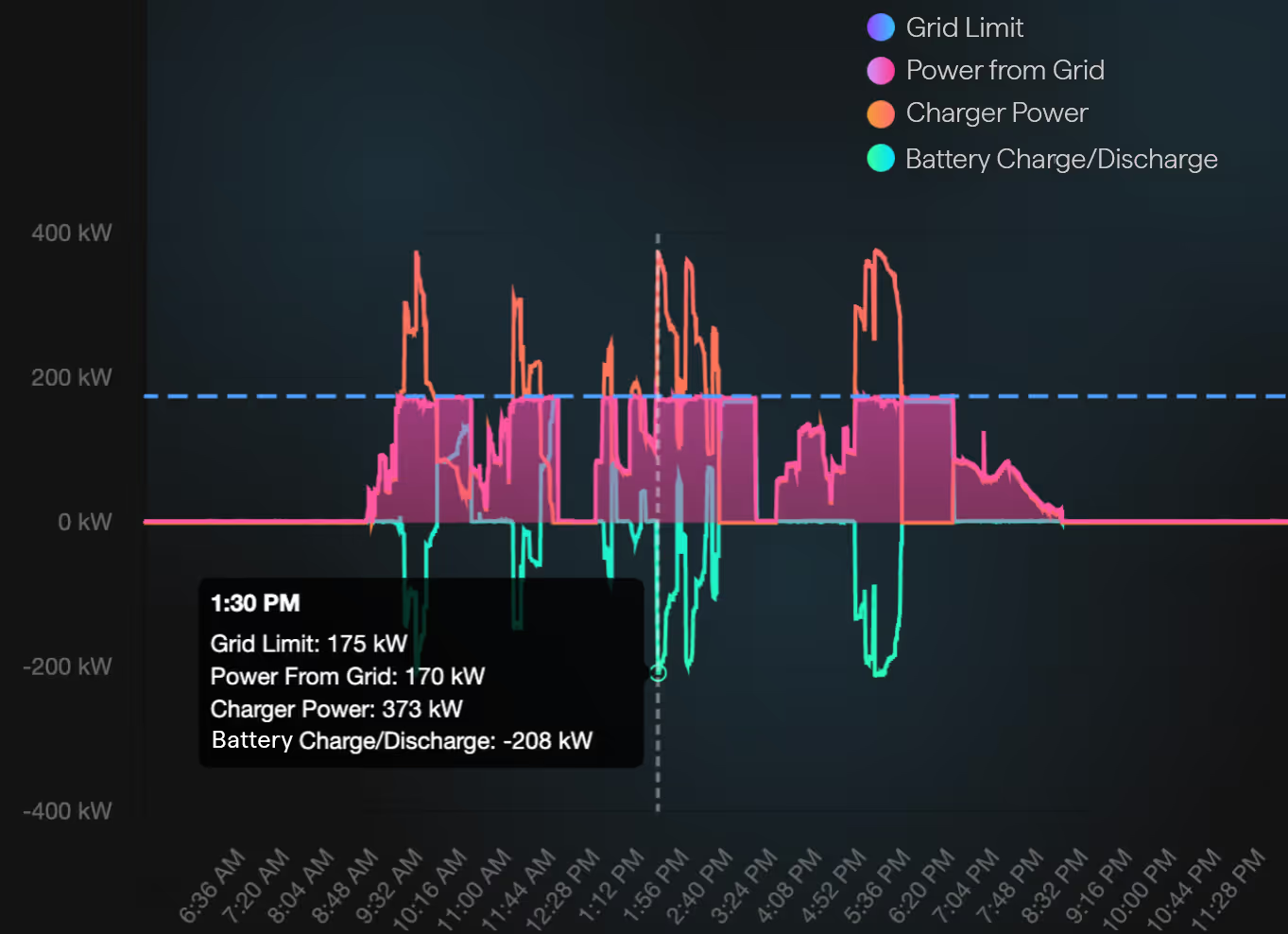
Here's how it works: the battery charges during off-peak periods, storing energy when grid demand is low. When a customer plugs in, the EMS draws on both the grid and the stored battery capacity simultaneously, delivering peak charging power that can significantly exceed what the grid connection alone could support. The result is a charging experience that's fast, reliable, and doesn't compromise the rest of your site's power needs.
The EMS is the intelligence layer that makes it possible. It continuously monitors all power-consuming assets on the site—EV chargers, lighting, IT loads—and dynamically allocates available power in real time. Nothing gets starved. Nothing gets wasted. Every kilowatt goes exactly where it's needed, when it's needed.
Works for new builds and retrofits
For new builds, battery-backed capacity means you can negotiate a smaller grid connection without sacrificing charging performance. That reduces interconnection costs, compresses timelines, and removes one of the biggest variables in the development process. If commissioning EV charging is the gate to a store opening timeline, any acceleration matters.
For retrofits, it means you can add high-power charging to existing locations without a utility upgrade (or at least a more manageable one). The battery absorbs the gap between what the grid can deliver and what fast charging demands—turning a site that couldn't support charging yesterday into one that can today.
Unlock sites you've written off
The retailers building durable EV programs aren't waiting on utilities to solve this for them. They're deploying infrastructure that works within the grid realities they have today—and scaling from there.
If grid constraints have stalled your EV program, whether at the planning stage or in the middle of a rollout, we'd like to show you what's actually possible on your sites.
Retailers across the country are staring down the same problem: not enough grid capacity to power what they need. Here's how battery-backed charging infrastructure changes the equation.
You've identified the sites. You know the demand. But when you go to your utility for the capacity to support a meaningful EV charging program, the answer comes back the same way: wait years for an upgrade, or scale back your ambitions.
For enterprise retailers, this isn't a hypothetical. Grid constraints are one of the biggest bottlenecks slowing EV charging rollouts—whether you're breaking ground on a new build or adding chargers to an existing location. And with utility interconnection queues stretching longer every year, waiting for the grid to catch up isn't a strategy. (This is especially painful when grid constraint is paired with EV charging mandates.)
There's a better way to think about it: your grid connection sets a floor, not a ceiling.
The problem is structural, and it's not going away
Every retail location operates with a fixed grid connection—a hard limit on how much power can be drawn from the utility at any given time. For new builds, that limit is negotiated upfront, and developers have to make difficult tradeoffs between what the store needs and what EV charging requires. For retrofits, it's even harder: you're trying to add meaningful charging capacity to a site that wasn’t designed for it.
The result is either a constrained charging program that doesn't meet customer expectations or a multi-year wait for a utility upgrade that may or may not arrive on schedule.
Battery-backed power capacity: charge beyond your grid connection
Electric Era's charging infrastructure pairs on-site battery storage with an intelligent energy management system (EMS) to let operators deliver more power to EV chargers than their grid connection alone would allow.
Here's how it works: the battery charges during off-peak periods, storing energy when grid demand is low. When a customer plugs in, the EMS draws on both the grid and the stored battery capacity simultaneously, delivering peak charging power that can significantly exceed what the grid connection alone could support. The result is a charging experience that's fast, reliable, and doesn't compromise the rest of your site's power needs.
The EMS is the intelligence layer that makes it possible. It continuously monitors all power-consuming assets on the site—EV chargers, lighting, IT loads—and dynamically allocates available power in real time. Nothing gets starved. Nothing gets wasted. Every kilowatt goes exactly where it's needed, when it's needed.
Works for new builds and retrofits
For new builds, battery-backed capacity means you can negotiate a smaller grid connection without sacrificing charging performance. That reduces interconnection costs, compresses timelines, and removes one of the biggest variables in the development process. If commissioning EV charging is the gate to a store opening timeline, any acceleration matters.
For retrofits, it means you can add high-power charging to existing locations without a utility upgrade (or at least a more manageable one). The battery absorbs the gap between what the grid can deliver and what fast charging demands—turning a site that couldn't support charging yesterday into one that can today.
Unlock sites you've written off
The retailers building durable EV programs aren't waiting on utilities to solve this for them. They're deploying infrastructure that works within the grid realities they have today—and scaling from there.
If grid constraints have stalled your EV program, whether at the planning stage or in the middle of a rollout, we'd like to show you what's actually possible on your sites.