More compute from the same connection: Introducing grid augmentation for AI data centers


Today, I'm excited to introduce the core capability behind CoPower, Electric Era's Power Capacity as a Service platform for AI data centers: grid augmentation. It's the same battery-backed approach we've proven across more than 30 sites and 24 utilities in EV fast charging, now scaled to the megawatt class.
The premise is simple: you can get more out of your grid connection than what you are actively using. You have unused power that can be repurposed to uprate your sellable compute by 15-40%.
Your data center grid connection is being underutilized
For years, the conventional wisdom has been that data centers must have a grid connection sized for rare events and peak load, but the reality is that the fully rated grid connection is not being used 100% of the time. Full use is not achieved due to inherent variability in facility mechanical load and IT load.
Mechanical cooling load experiences variability as a result of the diurnal day-night cycle and seasonality. AI inference IT load also has inherent variability resulting in effective load factors less than 100%.
The combined result is that data center grid connections are used to the fullest only a handful of hours a year, if at all. Every megawatt you've interconnected but can't reliably sell is compute you can't deploy and tenants you can't sign.
What grid augmentation actually does
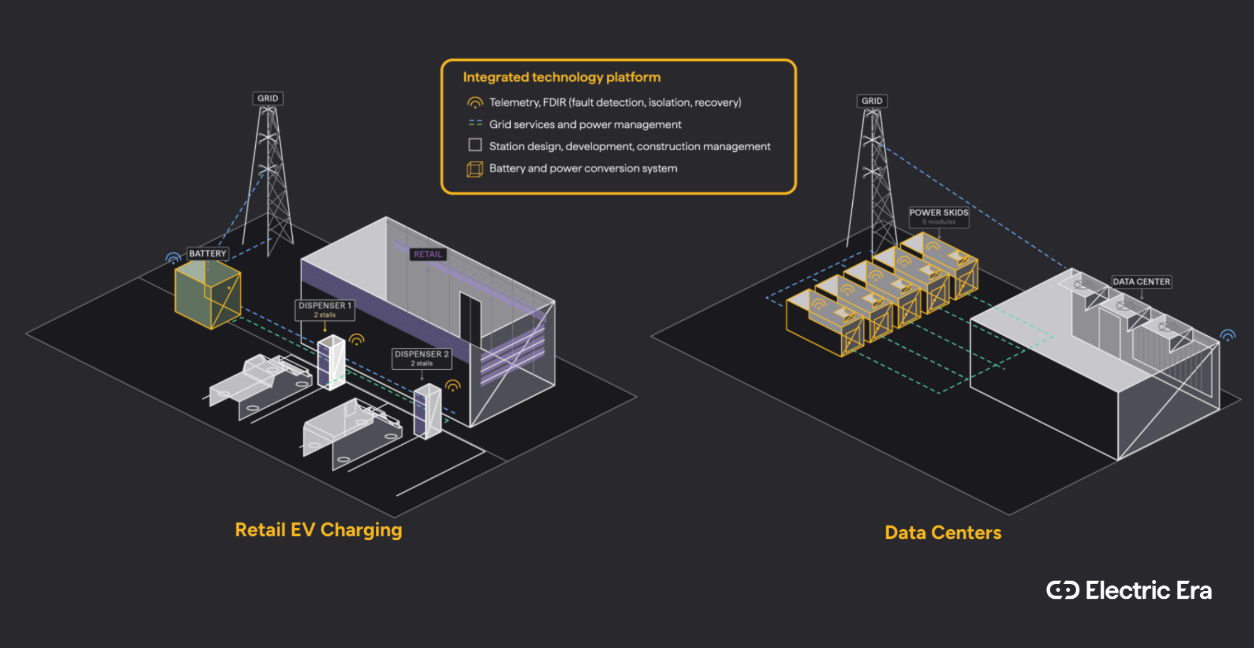
We install a behind-the-meter battery energy storage system (BESS) paired with a real-time control platform that rebalances how your site draws power throughout the day. When demand runs below the grid limit, the grid does the work. When demand spikes above it, the battery discharges, delivering power above your grid connection limit exactly when you need it. Your site behaves as though it has a larger interconnection than it physically does, a new effective nameplate raised in months, not years.
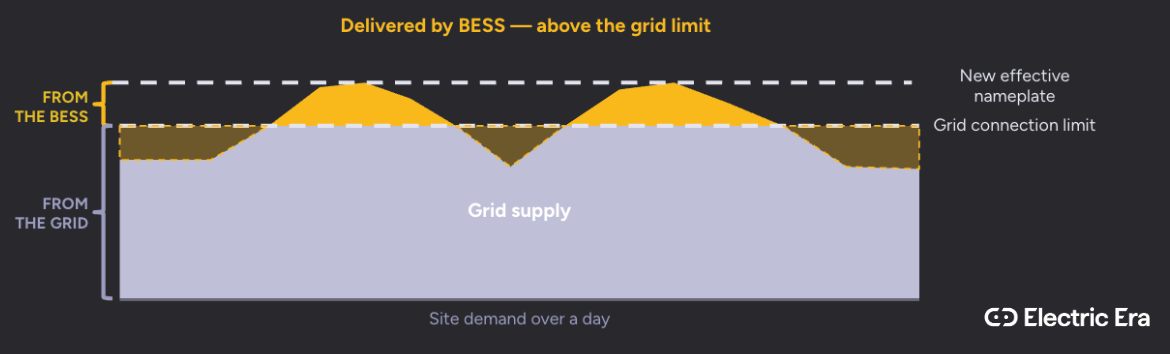
This is the key distinction. Legacy battery OEMs, integrators, and demand-management software solutions help you shave load to stay under the limit. CoPower delivers net power above it. Legacy solutions shave the ceiling down to fit; we raise the ceiling up.
Shaving load down is a simple software challenge that is commonly done. Conversely, augmenting power up above the grid limit to add net power requires advanced power control frameworks, and real-time control systems for safety and reliability.
From stranded power to sellable compute
Serving more load than your grid connection alone could carry is normally a statistical bet that your tenants and cooling loads won't all peak at once. When that bet is wrong, you breach the grid limit and something trips or gets curtailed.
CoPower changes that. The battery charges when the site runs below its grid limit and discharges above it during peaks, the way a water tower fills overnight and supplies extra pressure during the morning rush.
So when demand spikes, you're no longer relying on luck to stay under the physical grid limit, you have an active power source covering the gap, up to your new effective nameplate and sized to your load profile. That's what changes the math: the risk of selling above your original grid limit drops, because real power is delivered to back it up.
In our modeling, this unlocks 15-40% more usable IT load. Where a site falls within that range depends on your load diversity, so we'll create a forecast for your specific site before committing to a number, backed by up to a 99.99% availability guarantee on the power we deliver.
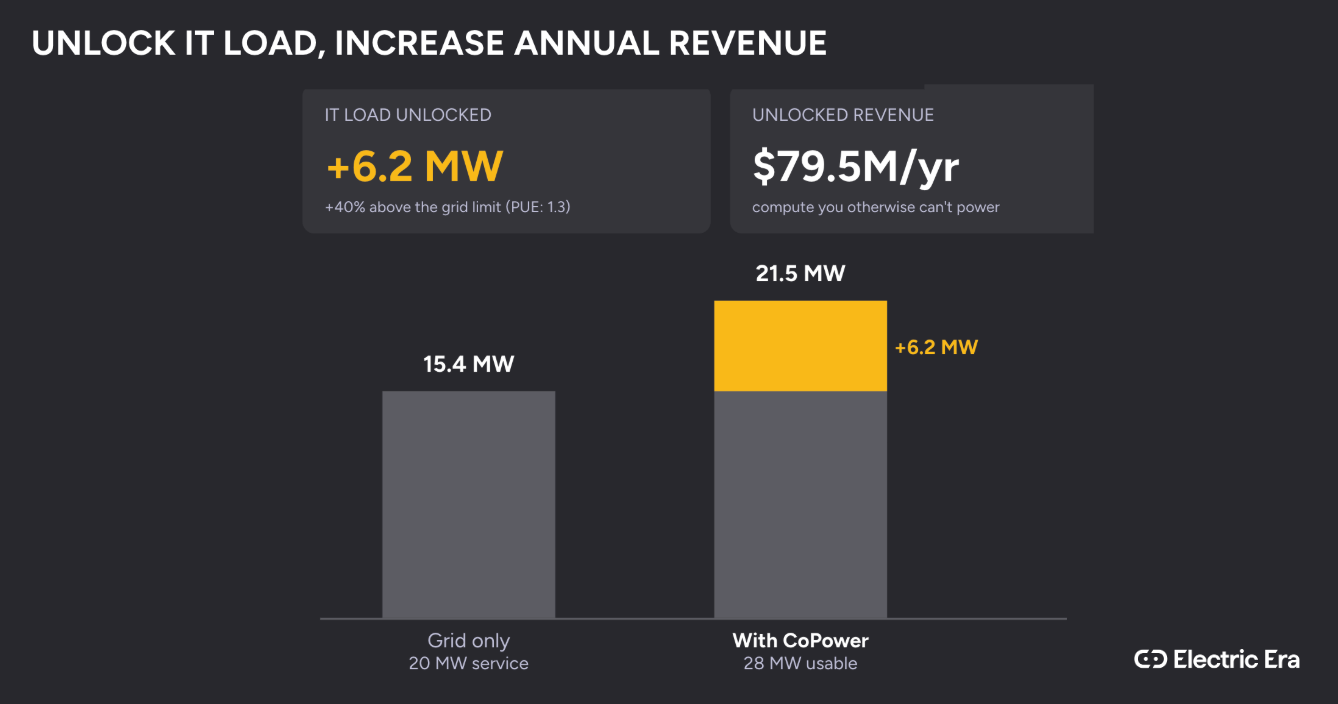
Serving more IT load means more revenue per year. Consider a 40% uprate on a 20 MW data center with 8 MW of added power capacity from BESS. This unlocks 6.2 MW of incremental IT load worth an estimated $79.5M per year.
Field proven performance
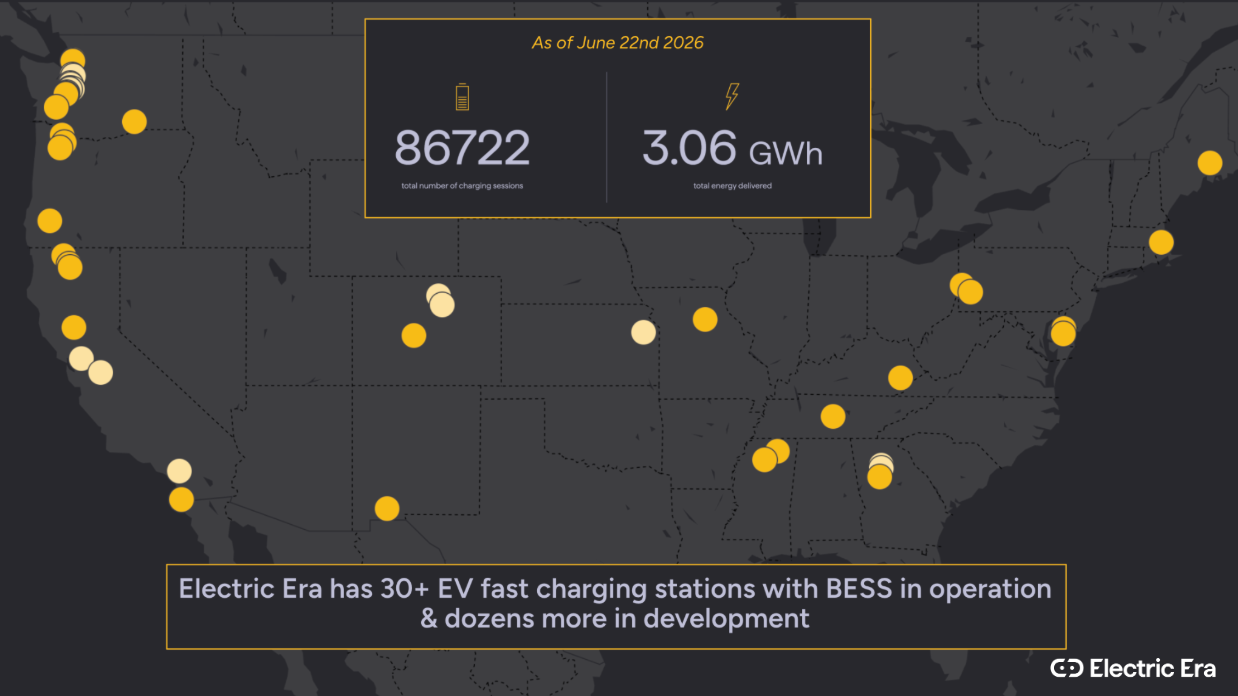
This isn't a new concept, we have been doing this across our customer EV charging fleet for the last three years in operation. We've energized 30+ battery-backed sites across 24 utilities in 15 states, delivered more than 3 GWh across roughly 85,000+ sessions, and augmented 564 MWh of energy in the last six months alone, demonstrating up to 70% grid augmentation above a grid limit. CoPower applies the same platform at the megawatt class using scalable and modular 1.2 MW skids.
The AI economy is moving incredibly fast. Demand for new power is insatiable, but unfortunately grid upgrades move at the speed of procedure. Grid augmentation is how data centers stop waiting and start selling the capacity they already have today.
In the next few weeks we will share more ways data centers can benefit from CoPower. Stay tuned for more insights on connecting ahead of the queue, holding power quality steady, and the new regulatory landscape, including Texas SB6 and the wave of large-load rules following it.
Onwards,
Quincy
Interested in learning more? Let's scope your site.
Today, I'm excited to introduce the core capability behind CoPower, Electric Era's Power Capacity as a Service platform for AI data centers: grid augmentation. It's the same battery-backed approach we've proven across more than 30 sites and 24 utilities in EV fast charging, now scaled to the megawatt class.
The premise is simple: you can get more out of your grid connection than what you are actively using. You have unused power that can be repurposed to uprate your sellable compute by 15-40%.
Your data center grid connection is being underutilized
For years, the conventional wisdom has been that data centers must have a grid connection sized for rare events and peak load, but the reality is that the fully rated grid connection is not being used 100% of the time. Full use is not achieved due to inherent variability in facility mechanical load and IT load.
Mechanical cooling load experiences variability as a result of the diurnal day-night cycle and seasonality. AI inference IT load also has inherent variability resulting in effective load factors less than 100%.
The combined result is that data center grid connections are used to the fullest only a handful of hours a year, if at all. Every megawatt you've interconnected but can't reliably sell is compute you can't deploy and tenants you can't sign.
What grid augmentation actually does
We install a behind-the-meter battery energy storage system (BESS) paired with a real-time control platform that rebalances how your site draws power throughout the day. When demand runs below the grid limit, the grid does the work. When demand spikes above it, the battery discharges, delivering power above your grid connection limit exactly when you need it. Your site behaves as though it has a larger interconnection than it physically does, a new effective nameplate raised in months, not years.
This is the key distinction. Legacy battery OEMs, integrators, and demand-management software solutions help you shave load to stay under the limit. CoPower delivers net power above it. Legacy solutions shave the ceiling down to fit; we raise the ceiling up.
Shaving load down is a simple software challenge that is commonly done. Conversely, augmenting power up above the grid limit to add net power requires advanced power control frameworks, and real-time control systems for safety and reliability.
From stranded power to sellable compute
Serving more load than your grid connection alone could carry is normally a statistical bet that your tenants and cooling loads won't all peak at once. When that bet is wrong, you breach the grid limit and something trips or gets curtailed.
CoPower changes that. The battery charges when the site runs below its grid limit and discharges above it during peaks, the way a water tower fills overnight and supplies extra pressure during the morning rush.
So when demand spikes, you're no longer relying on luck to stay under the physical grid limit, you have an active power source covering the gap, up to your new effective nameplate and sized to your load profile. That's what changes the math: the risk of selling above your original grid limit drops, because real power is delivered to back it up.
In our modeling, this unlocks 15-40% more usable IT load. Where a site falls within that range depends on your load diversity, so we'll create a forecast for your specific site before committing to a number, backed by up to a 99.99% availability guarantee on the power we deliver.
Serving more IT load means more revenue per year. Consider a 40% uprate on a 20 MW data center with 8 MW of added power capacity from BESS. This unlocks 6.2 MW of incremental IT load worth an estimated $79.5M per year.
Field proven performance
This isn't a new concept, we have been doing this across our customer EV charging fleet for the last three years in operation. We've energized 30+ battery-backed sites across 24 utilities in 15 states, delivered more than 3 GWh across roughly 85,000+ sessions, and augmented 564 MWh of energy in the last six months alone, demonstrating up to 70% grid augmentation above a grid limit. CoPower applies the same platform at the megawatt class using scalable and modular 1.2 MW skids.
The AI economy is moving incredibly fast. Demand for new power is insatiable, but unfortunately grid upgrades move at the speed of procedure. Grid augmentation is how data centers stop waiting and start selling the capacity they already have today.
In the next few weeks we will share more ways data centers can benefit from CoPower. Stay tuned for more insights on connecting ahead of the queue, holding power quality steady, and the new regulatory landscape, including Texas SB6 and the wave of large-load rules following it.
Onwards,
Quincy
Interested in learning more? Let's scope your site.