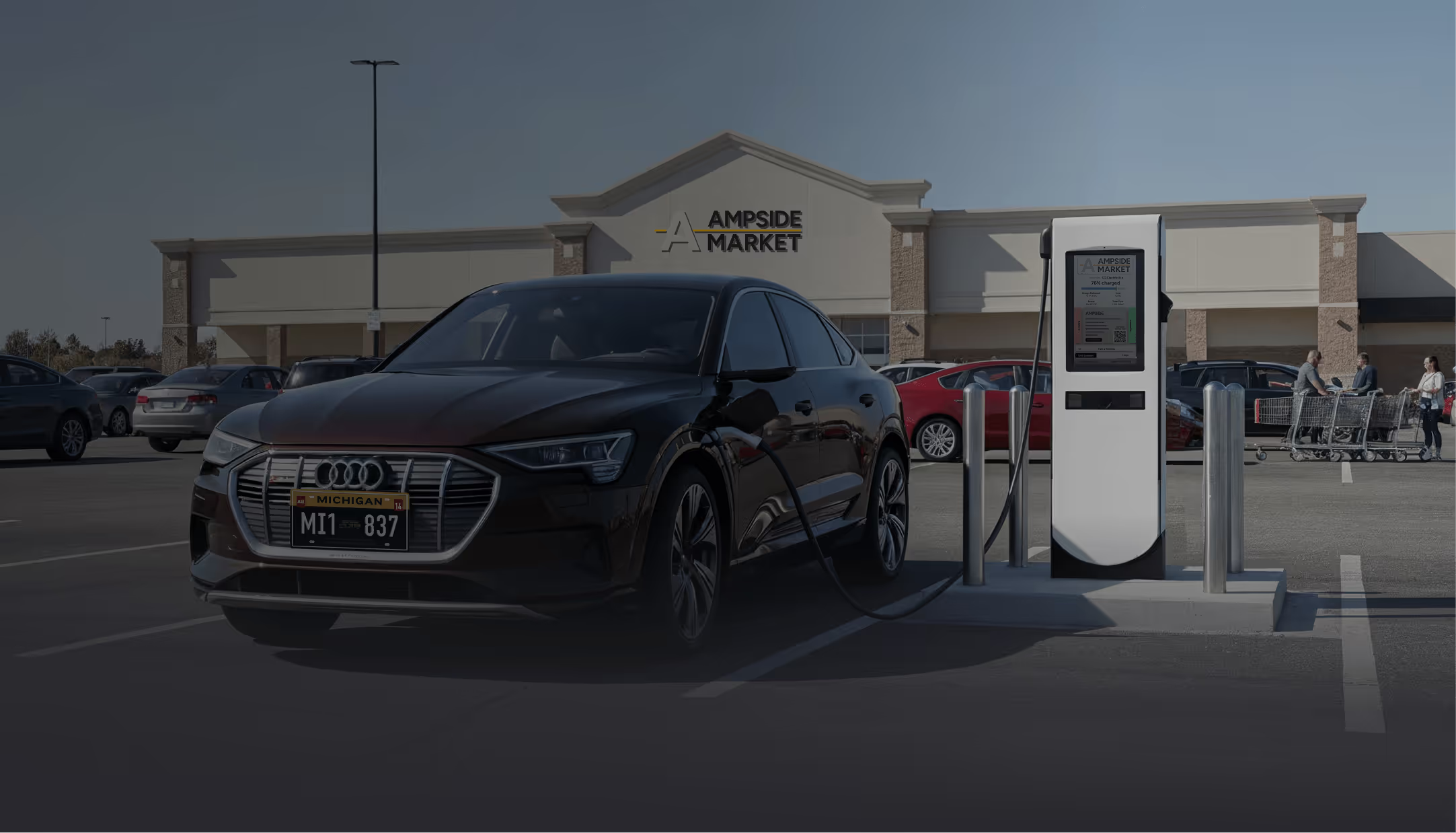
For real estate, fuels, and sustainability teams who've decided EV charging matters and are now evaluating how to actually build it. This guide covers what any EV charging provider should be evaluated on, and how to run an effective pilot.
New to EV charging? Start with Retail-First EV Fast Charging: A Complete Guide for the basics on adoption, category, and the fundamentals before diving into evaluation.
You choose the structure based on how much risk and upside you want to hold. Direct purchase means you fund the CapEx and keep 100% of the revenue and tax benefits. Charging-as-a-service means $0 upfront and a flat monthly fee. A site-host model means a third party owns and operates the equipment on your property, usually for a share of revenue or a flat lease payment.
If you're already on a site-host model, this is worth revisiting once utilization is proven: the same site that made sense to de-risk on day one often makes a stronger case for ownership once real session data shows the demand is there. Site-host networks also frequently don't share utilization data back with the host, which makes that revisit harder than it should be.
Whichever structure you pick, develop a utilization forecast that you're comfortable with. That de-risks the decision more than which model you choose. See the Profitability Model for what direct ownership looks like in real numbers.
.png)
Most enterprise pilots start anywhere from 5 to 20 sites, enough to see real variance across formats or geographies. Site selection itself should rest on independent data, not intuition: every candidate should be modeled against third-party EV session data.
A typical pilot runs 6 to 12 months from signed agreement to having enough session data to make a real scale-or-stop call. Success criteria should be set before the pilot starts, usually a utilization threshold tied to each site's own forecast. Once live, look at the session-per-day trend across the pilot, not just the Year 1 actuals. If the pilot succeeds, the same site-assessment process that chose the pilot sites should extend directly into the rollout plan.
.jpg)
.png)
Agree on success criteria with stakeholders before you sign. Set these alongside the utilization forecast. A pilot that never defined "working" in advance tends to get judged retroactively, by whoever has the loudest opinion once the data comes in.
Group the metrics into three buckets so the review doesn't turn into an unstructured spreadsheet argument. Reliability is effectively a gating metric: if the station doesn't reliably work, none of the other numbers can be trusted either.
Port type: providing both CCS and NACS options is now the safe default. CCS-only stations are becoming rare, and NACS-only remains mostly a Tesla-network specialty. Federally funded NEVI stations are actually required to include CCS, and several automakers, including the entire VW Group, still haven't committed to NACS, so millions of CCS vehicles will need support for years yet.
Port count should follow the site's expected utilization. A 4-port site, a 6-port site, and a 12-port site are really three different capital decisions, not the same decision at different sizes. See the Profitability Model for what CapEx looks like at each configuration.
Power level: buy for your desired dwell time, not the biggest number on a spec sheet. Most 2024–2026 EVs still top out at 150–250 kW; a growing share of 800V vehicles can pull 300–400 kW, but that segment is still a minority of the fleet on the road today. Higher power costs more to install and often draws more attention from the utility, see the demand charges and timeline sections below for how that plays out in practice.
Real estate identifies candidate sites, both sides sign a master agreement, and then construction begins, typically 6-8 months end to end, as fast as 54 days on record for the fastest documented deployment.
Where delays actually happen: utility interconnection and permitting, not the hardware itself. Battery-backed systems often avoid the big utility upgrade, which is frequently the difference between a 6-month build and an 18-month one. Worth asking any provider directly what their hardware requires.

EV charging touches more teams than a typical site-level project, and every organization sequences them a little differently. Real estate and facilities are usually closest to site selection and property approval. Operations tends to weigh in on layout, parking impact, and existing electrical capacity. Finance owns the investment case. IT and loyalty teams come in when kiosk and loyalty integration is on the table.
Retrofitting an existing lot typically costs more than a new build, since construction has to work around live operations and existing utility infrastructure. Unless, of course, you already have EV charging and are simply swapping hardware. If a site is already under construction for something else, both cost and timeline drop meaningfully.
The equipment itself shouldn't be a future capital surprise. Ask any provider how maintenance and component replacement are handled, and whether it's built into the model from day one or billed separately later.
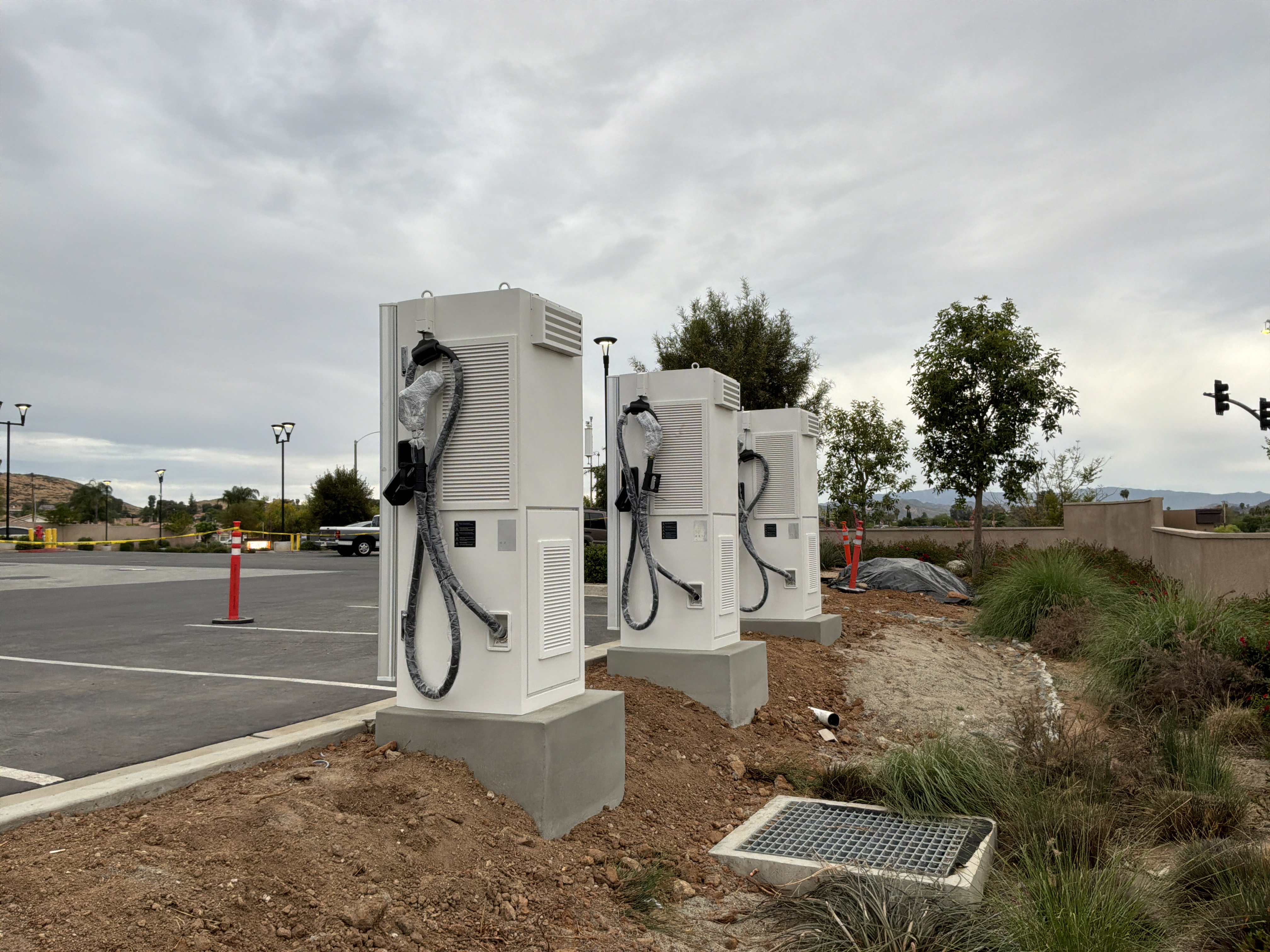


Electric Era backs this with the industry's first financially backed First Plug-in Success Rate guarantee: 85% or better, or a refund on O&M commensurate with the miss. No carve-outs for failed payments, vehicle-to-charger handshake errors, or blamed-on-someone-else excuses. If a customer is trying to plug in and charge, it counts.
Utilization, ROI, and the entire partnership all assume the station actually works. Well-designed battery-backed systems use adaptive software to smooth demand spikes automatically, often avoiding a costly utility upgrade entirely, not just reducing the bill.
Our hardware is also OCPI-compliant, and it can interoperate with other charging networks and apps. Discoverability on Google Maps, Apple Maps, and Plugshare matters just as much as the hardware itself.
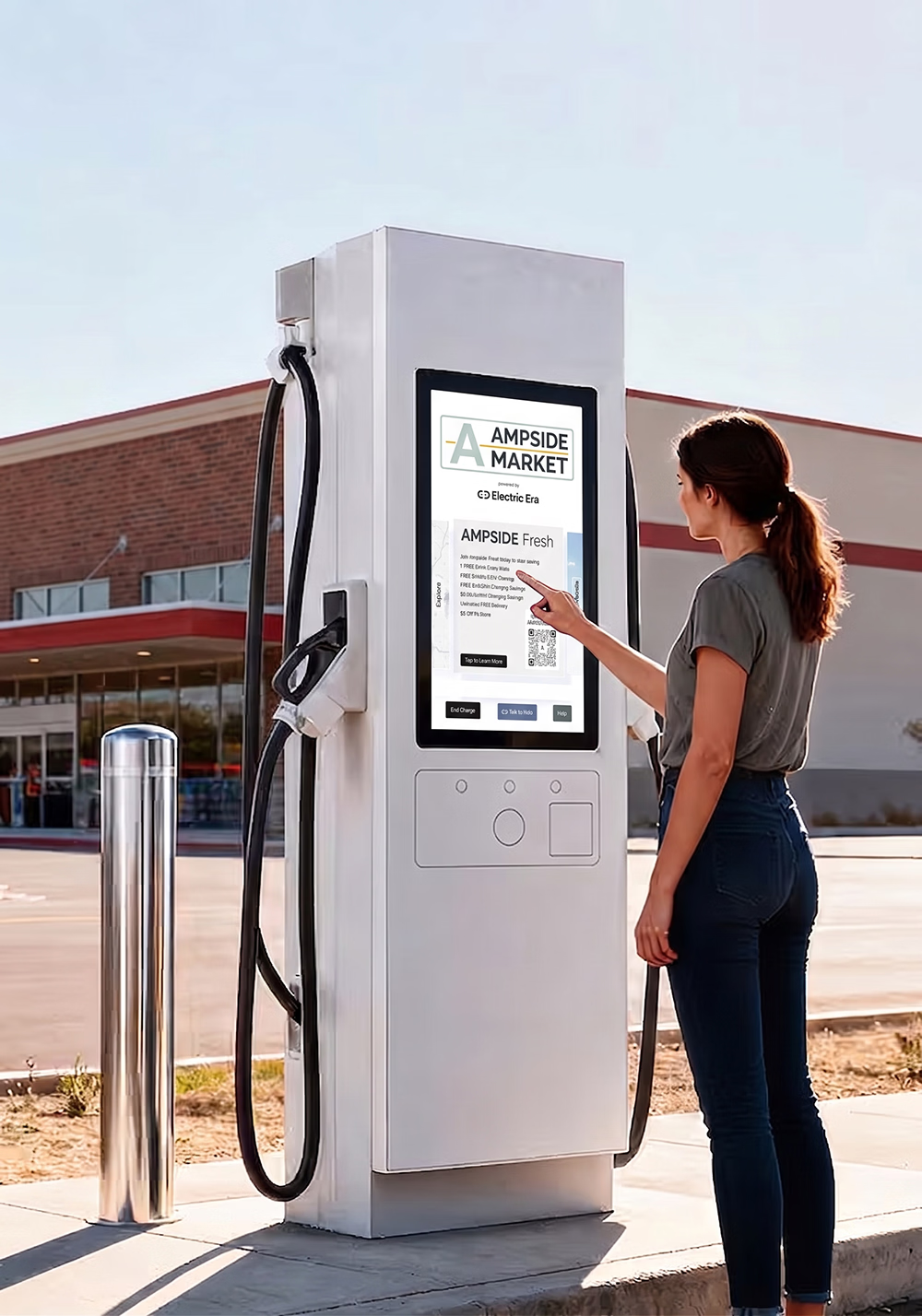
Demand charges are billed on the single highest moment of power draw in a billing period, not total energy used. That's a real problem for DC fast charging: a single session can pull 150 to 350 kW instantly, so an under-utilized station can rack up demand charges that erase most of the margin.
Electric Era's battery energy storage system (BESS) sits between the grid and the charger, discharging stored energy to cover that peak instead of pulling it straight from the grid. In one deployment, this let a customer draw a full 208 kW session while limiting grid pull to just 48 kW, avoiding roughly $4,000 in monthly demand costs, and often skipping a costly utility upgrade entirely.
.JPG)
The charging screen becomes another surface for your existing loyalty program, not a separate system to manage.
Extend membership and loyalty programs, personalized promotions, and retail media directly onto the kiosk with Electric Era's Retail Experiences, so a driver's dwell time becomes an engagement window instead of dead time in a parking lot.

When you own the station, the driver and session data is yours too, not something you have to request from a network operator or negotiate access to. Every session, every loyalty signup, every retail-media impression flows into systems you control, instead of sitting inside a third-party network's black box.
This is the direct answer to the site-host problem raised earlier: those networks routinely keep utilization and driver data to themselves. Ownership flips that. The same data that justified the initial investment keeps compounding in value as you use it to plan future sites, personalize offers, and make the ROI case to your own leadership with your own numbers.