ODOT opens NEVI Round 2: Over $32M available for Oregon corridor charging


If you own a convenience store, grocery store, or travel center along Oregon's major highways, you’ve likely noticed more EVs on the road—and few places for them to charge.
Oregon just opened round 2 of the NEVI program, a $32.3 million fund designed to pay for 80% of the cost to put high-speed EV chargers at your business. For retailers and property owners along these routes, this is a prime opportunity to secure significant federal funding while the state works toward its goal of adding at least 200 public EV fast chargers by the end of next year.
The funding structure:
The financial model for NEVI Round 2 is designed to encourage private participation by significantly lowering upfront costs:
- 80% federal funding: The NEVI program covers up to 80% of eligible project costs.
- 20% applicant match: Applicants are responsible for the remaining 20% share.
Estimated investment:
With total site costs typically averaging around $1M, a business’s share is roughly $200,000 for a permanent, high-revenue asset.
Corridor-specific caps:
ODOT has allocated specific dollar amounts across five key corridors:
- U.S. 20: $7,326,550 (9 stations)
- U.S. 26: $7,326,550 (9 stations)
- I-84: $5,626,549 (7 stations)
- U.S. 97: $6,927,300 (8 stations)
- U.S. 101: $5,106,550 (7 stations)
Scoring to win: What matters most
ODOT has refined its scoring criteria for round two, placing a heavy premium on team experience and long-term operational reliability:
- Applicant Team and Organization (13.3%): ODOT is looking for experienced partners who can navigate federal requirements with minimal oversight.
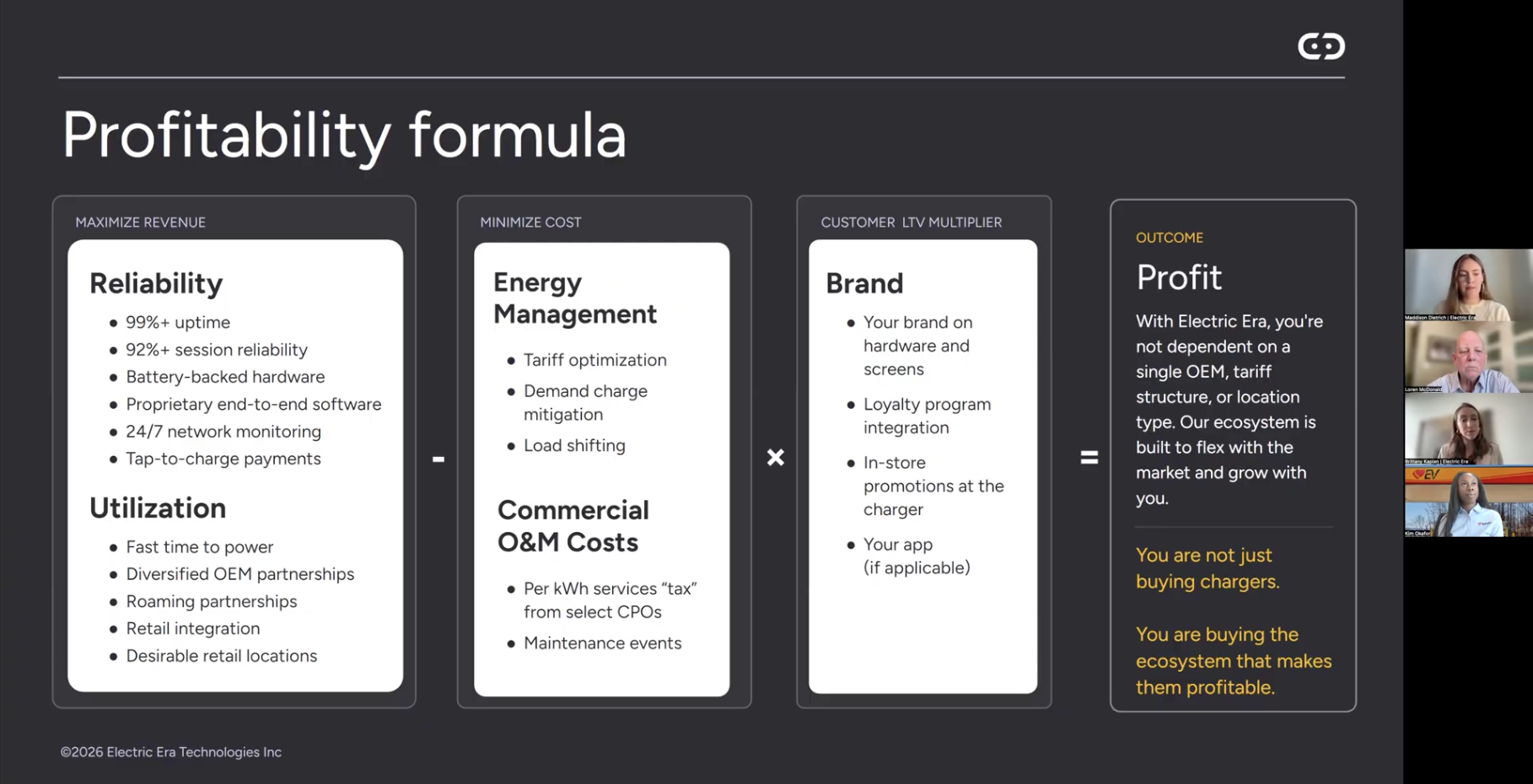
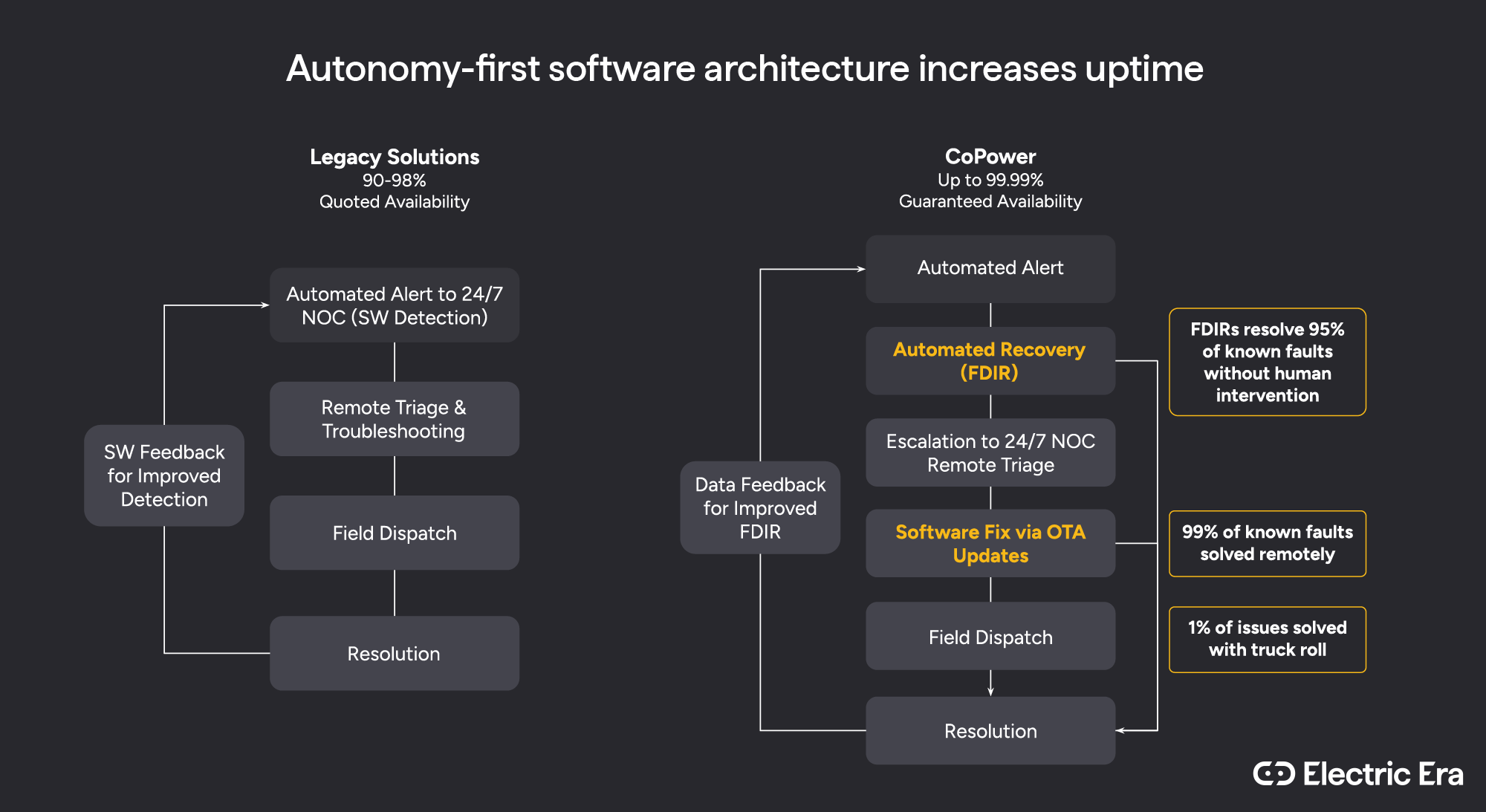
- Operations and Maintenance (13.3%): Winning bids must demonstrate a robust plan for the required 5-year maintenance period. Electric Era handles the entire O&M lifecycle, ensuring the 97% uptime requirement is met without the site host needing to manage technical repairs.
- Experience with Federal Requirements (10%): This includes navigating the complex Build America, Buy America (BABA) act and other statutory requirements.
Technical and site requirements
To qualify, all proposed stations must meet strict federal and state standards:
- 4-Port Minimum: Sites must feature at least four network-connected DC fast charging ports.
- 150kW Power Level: Each port must be capable of simultaneously delivering at least 150kW.
“Oregon NEVI is a fantastic opportunity for retailers and property owners to deploy heavily-subsidized EV charging along key travel corridors. We’re excited to see ODOT rolling out this program and maintaining the momentum of charging station deployments in the Beaver State ” - Isabella Craddock, Grants and Proposals Manager, Government Affairs, Electric Era
Faster deployment with Electric Era
Oregon's rural corridors often face "grid constraints" that can lead to prohibitive utility upgrade costs. Our patented battery-backed technology allows high-power charging even on limited grid connections, potentially bypassing years of utility delays.
One of the key criteria Oregon will assess when they score your application is the team's experience. With an 85% win rate on these grants and multiple active NEVI-funded stations in the field, Electric Era will help demonstrate that your project is ready to go. We’ve helped partners secure $25M in NEVI funds across eight states. The window for Oregon NEVI Round 2 is narrow, and the scoring for "Project Readiness" is competitive.
Contact our team today for a free Site Readiness Report. We will review your location, check the local grid capacity, and predict how your site would score against ODOT’s criteria—at no cost to you.
Related resources:
- Rescue EV grants and solve the execution gap with Electric Era
- Whitepaper: Accessing & Enabling Superior EV Charging Station Reliability
- Expanding EV Charging Access to Washington's North Cascades: SkyChargers Arlington Site
- Retailer Plaid Pantry Revolutionizes EV Charging with Cost Savings & Rapid Deployment
If you own a convenience store, grocery store, or travel center along Oregon's major highways, you’ve likely noticed more EVs on the road—and few places for them to charge.
Oregon just opened round 2 of the NEVI program, a $32.3 million fund designed to pay for 80% of the cost to put high-speed EV chargers at your business. For retailers and property owners along these routes, this is a prime opportunity to secure significant federal funding while the state works toward its goal of adding at least 200 public EV fast chargers by the end of next year.
The funding structure:
The financial model for NEVI Round 2 is designed to encourage private participation by significantly lowering upfront costs:
- 80% federal funding: The NEVI program covers up to 80% of eligible project costs.
- 20% applicant match: Applicants are responsible for the remaining 20% share.
Estimated investment:
With total site costs typically averaging around $1M, a business’s share is roughly $200,000 for a permanent, high-revenue asset.
Corridor-specific caps:
ODOT has allocated specific dollar amounts across five key corridors:
- U.S. 20: $7,326,550 (9 stations)
- U.S. 26: $7,326,550 (9 stations)
- I-84: $5,626,549 (7 stations)
- U.S. 97: $6,927,300 (8 stations)
- U.S. 101: $5,106,550 (7 stations)
Scoring to win: What matters most
ODOT has refined its scoring criteria for round two, placing a heavy premium on team experience and long-term operational reliability:
- Applicant Team and Organization (13.3%): ODOT is looking for experienced partners who can navigate federal requirements with minimal oversight.
- Operations and Maintenance (13.3%): Winning bids must demonstrate a robust plan for the required 5-year maintenance period. Electric Era handles the entire O&M lifecycle, ensuring the 97% uptime requirement is met without the site host needing to manage technical repairs.
- Experience with Federal Requirements (10%): This includes navigating the complex Build America, Buy America (BABA) act and other statutory requirements.
Technical and site requirements
To qualify, all proposed stations must meet strict federal and state standards:
- 4-Port Minimum: Sites must feature at least four network-connected DC fast charging ports.
- 150kW Power Level: Each port must be capable of simultaneously delivering at least 150kW.
“Oregon NEVI is a fantastic opportunity for retailers and property owners to deploy heavily-subsidized EV charging along key travel corridors. We’re excited to see ODOT rolling out this program and maintaining the momentum of charging station deployments in the Beaver State ” - Isabella Craddock, Grants and Proposals Manager, Government Affairs, Electric Era
Faster deployment with Electric Era
Oregon's rural corridors often face "grid constraints" that can lead to prohibitive utility upgrade costs. Our patented battery-backed technology allows high-power charging even on limited grid connections, potentially bypassing years of utility delays.
One of the key criteria Oregon will assess when they score your application is the team's experience. With an 85% win rate on these grants and multiple active NEVI-funded stations in the field, Electric Era will help demonstrate that your project is ready to go. We’ve helped partners secure $25M in NEVI funds across eight states. The window for Oregon NEVI Round 2 is narrow, and the scoring for "Project Readiness" is competitive.
Contact our team today for a free Site Readiness Report. We will review your location, check the local grid capacity, and predict how your site would score against ODOT’s criteria—at no cost to you.
Related resources:
- Rescue EV grants and solve the execution gap with Electric Era
- Whitepaper: Accessing & Enabling Superior EV Charging Station Reliability
- Expanding EV Charging Access to Washington's North Cascades: SkyChargers Arlington Site
- Retailer Plaid Pantry Revolutionizes EV Charging with Cost Savings & Rapid Deployment